Let me get this out right now: I love Orange Bitters, without which the Martini would be much reduced in my humble opinion. I thank Bacchus every time I'm behind the stick for Gary Regan's #6 and greatly enjoy the other varieties which are commercially available (including the newly-available Angostura & Fee's West Indies O.B.) as well.
I likewise enjoy the complexities of the various & sundry citrus fruits, enjoying not only their inherent flavors but the new flavors they can highlight or arouse from the other ingredients a given drink contains. The season for Honey Tangerines is just winding down here, (and in many places they are available year-round) and in addition to adding their fragrant mandarin-esque flavors to a great many cocktails, I became curious to see how a Tangerine bitters would compare to my beloved Orange...
Now, if you've been reading this blog, you've doubtlessly seen the first, rather epic, post I'd made which involved both citrus & bitters in which I waxed poetic on the role of bitters in cocktails - a feat which I shall not strain your eyes or patience further by replicating. Instead, short & sweet, I'll give you a recipe for another type of citrus bitters (which make a bloody fine Martini):
Honey Tangerine Bitters
9¼ oz. dried Honey Tangerine peel, chopped finely
1½ Teaspoons: Coriander
1½ Teaspoons: Quassia
1 Teaspoon: Cardamom, removed from pods
¼ Teaspoon: Caraway seeds
3 whole Cloves
1½ Cups: Neutral Grain Spirits
¼ Cup: JW&N Overproof Rum
¼ Cup: Plymouth Gin
Method:
1. In a small saucepan over low-medium heat, toast the Cardamom, Coriander & Caraway seeds for approximately one minute. Peel fresh Honey Tangerines, being careful to remove as much of the bitter pith as possible & dry in the low-temperature oven for approximately two hours.
2. Place the listed ingredients in a clean container. Add the alcohol, pushing the ingredients down so that they are covered by the liquid. Seal the jar & shake vigorously every day for two weeks.
3. Strain the alcohol from the dry ingredients by your preferred method (coffee filter, cheesecloth &c). Squeeze the filtered ingredients tightly to extract as much of the liquid as possible. Place the dry ingredients into a strong bowl or mortar, reserve the alcohol mixture in a clean container & seal tightly.
4. Muddle the dry ingredients with a pestle or muddler until the seeds are broken & the other ingredients are well-bruised.
5. Place the dry ingredients into a non-reactive saucepan & cover with 3 Cups of Water. Bring to a boil over a medium heat, cover & reduce the heat to simmer for about 10 minutes. Allow time to cool, covered. (about 40 minutes).
6. Place the (formerly) dry ingredients & Water mixture in a clean container, seal and leave for seven days, shaking vigorously each day.
7. Strain the Water-mixture from the dry ingredients by your preferred method (coffee filter, cheesecloth &c), discarding the dry ingredients. Add the Water-mixture to the Alcohol-mixture.
8. Allow to stand for an additional seven days, straining liquid by preferred method from any sediment.
9. Allow to stand for seven more days, straining liquid by preferred method from any sediment (there will be very little this time), then bottle & use/store/brag to your friends about what you've made.
I'll be sure to upload some pictures of these once I re-install my camera's software. Give them a try & let me know what you think. For my part I'll be sure to return to my typical posting schedule (?) now that my computer has returned to life.
On a parting note - a huge thanks to the fantastic folks at both Martin Miller's Gin and Death & Co. not only for allowing me to participate in the New York round of the Gin & Tonic competition yesterday but for putting up with the nervous mess I became behind the bar - it was an honor. Likewise, congrats to the winner(s) and other participants!
Cheers!
Wednesday, June 25, 2008
Bitters Makes it Better, part II


Sunday, June 8, 2008
A Touch of Quackery...et Franglais
Desolé, le canard non?! Je ne comprends pas, comment?!
After a fashion it was determined that this state of affairs could not stand - and a nice Long Island duck was summarily brought into my kitchen. Now, I suppose I can see why many people shy away from the delicious fowl - it's a touch trickier to dress & cook than your standard chicken and the occasional horror story of a smoke-filled kitchen often turns people off of the idea.
Duck is much richer in fat-content (though also in protein & iron) than most other poultry, it's true, but so long as one is careful in the preparation & cooking, le canard makes for quite the princely dish. And even though 'oven season' is quickly waning, now is the prime season (depending where you live) to purchase duck fresh. If you're terribly concerned about the fatiness of the little bird, with a little extra investigation, one can find the much-leaner wild duck (muscovy) with little trouble. But what about how to cook it? Read on, gentle reader & see moi plat du jour:
Le Canard de Miel avec Lavande et l'Estragon
4½-5 lb. Duck (Long Island)
½ Cup: fresh Orange, pith removed & coarsely chopped
6 Tablespoons: Orange Blossom Honey
3 Tablespoons: Lavender, dried
2 Tablespoons: EV Olive Oil
1½ Tablespoons: Dubonnet Rouge
2 Teaspoons: Tarragon, dried
1 Teaspoon: fresh Orange zest
½ Teaspoon: ground Mustard seed
½ Teaspoon: Sea Salt, fresh ground
½ Teaspoon: black Pepper, fresh ground
1. Preheat oven to 350º.
2. Clean & dress duck, being careful to remove all excess fat, giblets & wing joints. Using a skewer or fork, prick the skin of the duck between the layer of fat & the meat beneath. Season the duck inside & out with the salt & pepper (which can be adjusted to personal taste).
3. In a bowl, combine the Orange, Orange zest, 1½ Tablespoons: Lavender, ½ Tablespoon: Dubonnet, & 1 Teaspoon: Tarragon. Stir well & stuff the duck with the mixture. Seal the duck by your preferred method (skewers, truss, &c).
4. In a large skillet heat the Olive Oil on medium-high heat & saute the duck until a light golden-brown on all sides. Remove from skillet & place on a roasting pan (preferably with a resovoir for the juices).
5. In another bowl combine the Honey & Mustard with the remaining Lavender, Tarragon & Dubonnet, adding 2 Teaspoons of the Oil & rendered fat from the skillet. Whisk with a fork & brush the duck with approximately half of the total mixture.
6. Place the treated duck in the oven & bake for 35-40 minutes. Brush duck with remaining Honey & spice mixture and bake for another 20-25 minutes. When a skewer inserted into the duck's thigh yields clear juices (or when a meat thermometer reads poultry/duck) the bird is done.
7. Remove from the oven & allow to rest for ten minutes in a warm place before carving. Reserve the liquid & orange from the duck for use as a condiment & enjoy.
As this delightful, if unplanned, exercise in hospitality occured fairly late in the evening (& in a very hot kitchen), we didn't bother with any additional courses, but all agreed that the duck would be well-accompanied by (decadent, I admit) potatoes a'la duchess whipped with the addition of some garlic, sage & shaved gruyere. For a lighter alternative, perhaps a fresh salad or some fresh steamed green beans almandine?
Finally, while a glass or three of Pinot Noir would be de riguer for such a dish I sadly haven't a drop on hand, so we enjoyed it with a spot of cold Boddington's Pub ale, whose clean flavor complimented the rich poultry quite nicely. Danielle, who does not enjoy the subtlties of beer, indulged in a mild cocktail made a'la minute to highlight the various semi-sweet flavors of dinner: Jasmine a'la Minute
1 oz. Dubonnet Rouge
1 Teaspoon: French Vermouth
1½ oz. strong Jasmine tea, chilled
1 oz. fresh Orange juice
2 dashes: Regan's Orange bitters #6
1 Teaspoon: Orange Blossom Honey
Combine ingredients & shake well with ice. Strain into a glass & garnish with a wedge of fresh orange.
Cheers & Enjoy!
As a semi-addendum: serious congratulations to Mr. David Wondrich for his shiny new James Beard Award! Similar, and equally serious, congrats to Mr. Dale DeGroff for his nomination for a J.B. Award, as well as to Mr. Fritz Maytag for his Lifetime Achievement Award! Keep the dream alive guys - we're with you all the way!
Thursday, June 5, 2008
Flirting with Flora: Martin Miller's G&T Competition
2. I'm fairly partial to G&T's and, as I've said before, I love to mess with the ingredients of the classics.
3. Anything born of "love, obsession & madness" has got my vote nailed down, as I've an over-abundance of the last two (but if you're reading this you probably already knew that).
4. A (long) shot at the prize: a trip to this year's Tales of the Cocktail in New Orleans, which I won't otherwise be attending for reasons of finance - pretty sad, I know - I'll get out there one of these years...
So what did yours truly bring to the table? Given my relatively-recent obsession with flora as a flavor element in cocktails, as well the fact that the (crazy) weather has settled some, I turned to my backyard for some inspiration which I found in the form of:
 Honeysuckle is a flowering vine which inundates large portions of the East Coast's wooded areas from mid-spring to summer. The flowers, aside from their pleasant aroma contain tiny droplets of a delicate, subtly-sweet nectar - which I recall madly imbibing huge quantities of in the summer months of my childhood. My backyard is filled with the stuff which, due to the weather, has only just begun to fully bloom.
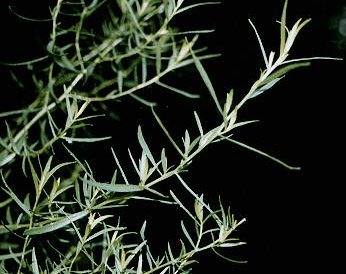 Tarragon is a common kitchen herb, in fact, one of the four fines herbes crucial to French cuisine (& a much-loved addition to much of my own cooking). With its pungent, anise-esque flavor it also serves as an interesting addition to certain cocktails, as the folks over at Imbibe have just reported. I had just plucked a bit from the planter & had been drying it out on the windowsill anyway, so...
 A Midsummer Night's Tonic
 Sunday, June 1, 2008
Mind the Tail...
Now, Victor Bergeron once said, "Bartending is a bunch of hokum; you add an ingredient here, change a quantity there and you've got a new drink", and this is quite the valid explanation of (part of) what we do when experimenting as mixologists. By taking a proven classic libation & changing proportions or flavors, while preserving the delicate balance of flavors between the ingredients, we can create new drinks, which are often radically different in character than the originals they're based around.
Sticking with this notion, as well as combining some recent posts of mine on flavor elements like flora & orgeat in cocktails, I'd like to stay with my man 'Vic for a moment longer. The Trader, among other exotica exponents, was rather fond of a large type of drink which was often prepared for many people to enjoy communally - not quite a punch, but always a libation which packed one. One such 'cocktail bowl' was the Scorpion - an infamous, mostly rum-based beverage named largely for the sting it possesses.
Though many recipes for exotica drinks like the Scorpion Bowl exist, having sampled several different recipes I feel the one Vic published in his 1946 Book of Food & Drink is among the best - a drink which, to quote him once more, "does not shilly-shally or mess around in getting you under way". This twenty-person recipe, for those who should like to try it unaltered, goes as follows:
Vanilla-Jasmine Orgeat
 13 oz. white Rum (Brugal)
Combine ingredients in a punch bowl & fill with cracked ice. Allow to stand for about twenty minutes under refrigeration & top with fresh cracked ice. Garnish with edible flowers & serve with long straws. Sip.
Cheers & Enjoy!
Wednesday, May 28, 2008
Flirting with Flora: Hibiscus
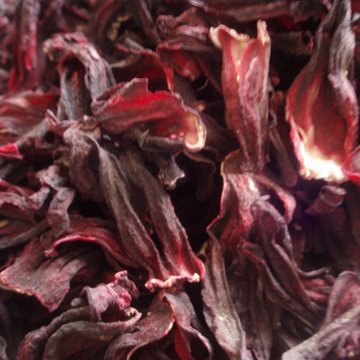 This beautiful flower, also known as rosemallow or roselle, is a fairly common addition to many herbal teas and is quite often compounded into a tisane all by itself. It posesses a dry, discernably floral aroma & a bright, clean flavor not entirely dissimilar to an unsweetened Cranberry juice. I was first introduced to a cold Hibiscus tisane, known as Jamaica (sometimes Yamaica) by former co-workers of mine from Oaxaca, where the tart drink - sans alcohol - is quite popular.
 A quintessential mixer in a wide variety of drinks, real Grenadine is an invaluable ingredient for adding a touch of sweetness, color and its own touch of refreshing favor on which other elements of a cocktail may be highlighted. Some great recipes for making it at home abound, but I wondered how I might add something new to this already well-covered matter. Simple - incorporate a touch of Hibiscus to one's Grenadine, like so (©):
.jpg) Hibiscus Grenadine
Hibiscus GrenadineEnjoy it almost anywhere you would normal Grenadine, or in a (©):
.jpg)
Cheers & Enjoy!
Saturday, May 10, 2008
A Swizzle Solution
“[…] a word about swizzling. I think it’s a hell of an idea. You get your drink and stir it with a spoon but you don’t get the proper dilution to make it taste good. With your pet swizzler you work it up and down in the drink between the palms of your hands and you get a good chill on the drink and the proper dilution of any strong drink.” (p 51)
 The swizzle stick which our esteemed Trader discuses is a fairly common tool throughout the Caribbean islands & other tropical regions. It is really just a stick, grown from the Quaraibea Turbinate plant – which is native to (& only available on) many of the southern islands like Jamaica, Martinique & Grenada. All well & good if you live in that part of the world, but for whatever reason these handy little twigs are not exported beyond their native climates. What's a cocktail geek to do?
 2. Use a round-shafted spoon in an approximation of the swizzling technique – but this doesn’t work so well.
3. Use the directions what follow to make your own pet swizzle:
Here’s How:

2. Procure a few short bamboo skewers (they come in a box of about a billion).
3. Trim the spoon end off of the shaft (if you'd like a light muddler on one end of the swizzle, leave a ¼" of the spoon on) with a saw.
4. Trim the skewers down to approximately 1" in length with a saw or clippers.
6. Center the bit & drill your first hole ⅛" from one end of the handle.
7. Use anything that forms a right angle (t-square, protractor, &c) to line the bit up at a 90º angle to the first hole & drill a second hole about ⅛" from the first one.
8. Carefully tap the skewers into the holes - go slowly & try to make them even on both sides of the handle.
9. Round any edges off the skewers & handle with a file or fine-grit sandpaper.
10. Wash the whole thing in a dishwasher/by hand and coat with mineral oil such as you would a muddler***.
10a. Smile and whip up a:
.jpg) Queen’s Park Swizzle
Queen’s Park Swizzle3 oz. Demerara Rum (preferably 86º)
2 Teaspoons: Demerara Simple Syrup
Juice of ½ fresh Lime
7-9 fresh Mint leaves
3 heavy dashes Angostura bitters
Clap the mint to release oils & juice the lime.
A few remarks about the instructions above:
Thursday, May 8, 2008
MxMo XXVII: RUM!
 For as long as the Mixology Mondays event has been around and as much as I've followed the wonderful creations it spawns, I had never thought that I might attempt to add one of my own creations to the queue. Yet, with encouragement (& remarkably patient advice) from the fantastic folks over at Married with Dinner, here goes:
MxMo XXVII: RUM! is, quite appropriately, being hosted this month by the folks over at TraderTiki, a lovely bastion of all things Rum & Tiki. They requested a concoction, preferably original, which creatively utilizes the noble spirit itself and I should like to oblige, alongside a look at the construction of my libation.
We’ll start with three things you may or may not know about yours truly (I am new to this after all):
1. I am quite the rum-hound (The volume of rum-related links on this page should cue you to that).
2. I love spicy stuff (The volume of spices tossed about in recipes here should cue you to that too).
3. I am a big Tom Waits fan (Ok, I’ll ‘splain that one in just a moment).
Being well aware of these elements of my personality already, I got to thinking one day as I sipped a Dark & Stormy, about how the flavors of Cardamom and Ginger – perhaps because of their similarities – play so well together. Another sip brought further consideration on how good a foil Rum can be for the potential heat of such spices – reducing their potency to a pleasantly slow-building overall flavor. Now ginger beer I’ve made before, by both fermentation & syrup-methods, but in my somewhat-limited homebrewing experience, spices like Cardamom can be tricky to incorporate as a primary flavor element. Syrup method it is…now for the rum:
In this case the dark, molasses-heavy flavor of Gosling’s is perfect against a good Bermuda-style ginger beer – which is lighter both in color & character than its Jamaican cousins. As I developed the new drink, I reasoned that a reversal of these characteristics was in order - heavier on the spice with a milder type of rum for balance. I settled on a comfortable blend of two of my favorites: the 4-year old Rhum Barbancourt & a 5-year old Demerara by El Dorado:
Barbancourt’s youngest aged rhum hails from Haiti, where it is twice-distilled in the manner of Cognac from pressed sugarcane juice and molasses. It is then aged to a mellow brown in limousin oak barrels, which impart a slight hint of vanilla to the 86º, cold-filtered finished product. (Such character is even further enhanced in their other longer-aged products, which makes these better for sipping, rather than mixing.)
Made by the same distillers who produce the venerable Lemon Hart, El Dorado’s 5-yr Demerara, is distilled in Guyana from pure molasses. It is then aged in used-bourbon & whiskey casks and blended (to 80º) to create a wonderful golden-brown rum, rich with smoky-sweet notes (which, much like Barbancourt, make the longer-aged products even better – for sipping).
Now that sorts out the spirits & spices, so what the hell does Tom Waits have to do with it, you ask? Why he provided the name for (& the music for me to listen to while I prepared) the following riff on the classic Dark & Stormy, of course (©):
.jpg)
Emotional Weather Report
¾ oz. Rhum Barbancourt, 3-star
¾ oz. El Dorado Demerara Rum, 5-yr
½ oz. Pimm’s No. 1 Cup
½ Teaspoon: fresh Lime juice
2 dashes Angostura bitters
2 oz. homemade Cardamom Ale Syrup
4½ - 5 oz. Club Soda
Combine ingredients in a highball glass over ice, adding Club Soda last. Give a quick stir & garnish with a wedge of fresh Lime.
Cardamom Ale Syrup
1 Cup: Water
½ Cup: Demerara Sugar
½ Cup: white Sugar
1/3 Cup: Cardamom pods, whole
¼ lb. fresh Ginger, julienned
1 Tsp: Red Chili powder
¼ Tsp: Cinnamon
Combine ingredients in a nonreactive saucepan/pot & stir to mix. Bring to a light simmer on low-medium heat for approximately half an hour, stirring occasionally throughout. Strain by preferred method (cheesecloth, coffee filter, &c). Use as a soda syrup - approximately 2 oz. to every 4½ - 5 oz. of soda water.
*UPDATE*
There are a few adjustments to the recipe listed above which have greatly improved its flavor. I am reminded of this by our friends over at Tiki Time! whose musings (in Dutch) about the formula were pretty spot on. Make the following alterations to the above:
- Cardamom should be Green (Alternately half Green & half White)
- Ginger, more simply, should be about a ¼ Cup's worth
- Reduce Red Chili powder to a generous ¼ Tsp.
- Toast the dry spices in the pot before adding other ingredients
- You may like to let the syrup cool before straining...
- ...the addition of about 2 Tsp. of good Ceylon tea to this cooling period is an excellent suggestion
Happy Monday, Cheers & Enjoy!
A Dash of Flavor: Orgeat &c.
As fellow cocktail blogger Darcy O'Neil describes, oil emulsions such as (or similar to) Orgeat have been made for centuries, even millennia, primarily because of their textural similarity to milk, yet without any of dairy's inclinations toward spoilage. Historically, the emulsion of choice was barley & water, but numerous other nuts & roots were often used. Religion further complicated matters with the observation of fasting or 'famine' days, wherein the use of animal products (particularly fats) was ostensibly forbidden. As cooking developed into an art, or at least an applied practice, in many cases the rather bland flavor of barley was supplemented by such alternatives as almonds, walnuts, tigernuts and melon seeds as available.
Early examples of this progression can be seen recorded in such historical texts as "The Closet of the Eminently-Learned Sir Kenelm Digby", made available by the wonderful folks at the Gutenberg Project (all of you cordial-makers & homebrewers out there should check out this book asap). Many of the recipes presented therein, in 1669 no less, describe the preparation of an obviously well-known emulsion of barley, with the 'pap' recipe (p.136) describing the addition of mace, nutmeg & almonds, as well the optional addition of rice, oats, or pine nuts for extra flavor. Approximately a hundred years later, the fifth edition of "The Compleat Housewife" lists a 'Fine Syrop of Almonds', while some centuries later cocktailian author Charles Barker notes the first mention of Orgeat (by name) appears on an 1817 reciept.
As Mr. O'Neil has covered the subject of ordinary Orgeat quite extensively & provided a wonderful recipe for the stuff, I had thought to focus on a few of the different regional variations on the standard beverage/syrup - many of which make quite the excellent addition to any number of cocktails. It bears mentioning that the first two recipes are not typically made as syrups, rather as drinks in their own right – so I’ve included my method for concocting syrups (which are more shelf-stable and versatile) from them:
Horchata de Melón
The Spanish term for Orgeat, this particular emulsion likely stems from the abundance of melon species found in the agricultural regions of Spain. A great way to use a part of the melon otherwise bound for the trash, I was introduced to this variant in Time-Life’s “Good Cook: Beverages” book. This incredibly-useful reference was recommended to me by a certain Flighty mixologist and I now heartily recommend it to you, along with this modified recipe:
2 Cups: fresh Melon Seeds
3 Cups: Water, boiling
3/4 Cup: white Sugar
2 Teaspoons: ground Cinnamon (or other spices depending on the Melon used)
Wash the seeds (you can use any variety of melon, from honeydew to cucumber) thoroughly, then grind them fine in a food processor, shells & all. Combine the remaining ingredients in a bowl & stir well. Cover & refrigerate, stirring occasionally, for 12 hrs. Fine-strain through cheesecloth to remove all solids & bottle.
To produce a syrup for cocktails: Omit the sugar from the basic recipe and proceed as directed. Measure the strained liquid and mix in 1.25x this volume of white Sugar. Stir well to mix & bottle.
Enjoy it in this cocktail (©):
Melón de Rosa
1 oz. white Rum (I like Brugal here)
½ oz. Grappa (Nonino or Nardini are great)
½ oz. + 1 Teaspoon: Horchata de Melón syrup
½ oz. fresh Watermelon juice
1 dash Angostura bitters
Shake well with ice & strain into a cocktail glass. Garnish with a spear or fan of fresh Melon.
Horchata de Mexico
A riff on the Old World Horchata(s) which often use nuts (such as Almonds or Tigernuts) exclusively, this Mexican adaptation utilizes rice & almonds as its base. I was first introduced to this delightful, if time-consuming, drink by my Oaxacan coworkers in the kitchen of my first food-service job & years later developed it into a cocktail syrup:
5 Cups: Water, boiling
1½ Cups: white Rice, raw
1 Cup: white Sugar
½ Cup: blanched Almonds
1x Canella Cinnamon stick (~3”)
½ Teaspoon: fresh Lime zest
¼ Teaspoon: Vanilla Extract (optional)Lightly toast the Rice and Almonds in a pan over medium heat; don't allow the rice to take on too much color, but both ingredients should be fragrant. Place the toasted mixture in a food processor & pulse briefly to break the particles down slightly - don't process to a powder or your final product will be gritty. Combine mixture with remaining ingredients in a covered container & steep for 12-24 hours, stirring occasionally. Fine-strain through several layers of cheesecloth to remove all solids & bottle.
To produce a syrup for cocktails: Omit the sugar from the basic recipe and proceed as directed. Measure the strained liquid and mix in 1.25x this volume of white Sugar (or a mixture of raw and white Sugars). Stir well to mix & bottle.
Enjoy it in this libation (©), based on the venerable Japanese Cocktail & named for one of my former co-workers:
Fausto Cocktail
2 oz. Quebranta Pisco (I like BarSol in this)
¾ oz. Horchata de Mexico syrup
¼ oz. fresh Lime juice
1 dash Peychaud’s bitters
1 dash Regan’s Orange #6 or Spiced Lemon #1 bitters
Shake with ice & strain into a cocktail glass. Garnish with a twist of fresh Lime.
Thandai
This thick mixture, more of a spicy paste than a syrup, hails from Northern India where it is blended with milk & ice to make a delicious cooling beverage. Both Jaggery (an Indian palm sugar) & bottled versions of this are available at most Indian/Eastern groceries, but why hunt for it when I’ve developed this recipe:
1 Cup: blanched Almonds
3 Tablespoons: fresh Watermelon seeds
2 Tablespoons: fresh Cucumber seeds
1 Tablespoon: dried Pumpkin seeds (unsalted)
1 Tablespoon: dried Sunflower seeds (unsalted)
4 Tablespoons: grated Jaggery (or substitute ½ brown Sugar + ½ white Sugar)
1 Teaspoon: ground Cardamom
½ Teaspoon: ground Galingal (or substitute ½ Ginger + ½ Mace)
¼ Teaspoon: white Pepper (optional, to taste)
2 oz. Water
¾ oz. fresh Lime juice
2½ Teaspoons: Rosewater
Combine dry ingredients in a food processor & blend until powdered. Slowly add liquid ingredients, blending to incorporate (you may need a spatula to incorporate all ingredients). When smooth, remove from processor & store in an airtight container; I find a small squeeze bottle ideal for storage & portioning.
Enjoy in this libation (©), its name (and composition) is a play on the “Japanese” Cocktail – try & figure it out:
Isodo Cocktail
1 oz. Cognac (VS or better)
1 oz. Batavia Arrack
1½ Tablespoons: Thandai
1 Teaspoon: fresh Lime juice
2 dashes Angostura bitters
1 dash Simple syrup (optional)
Dry shake (without ice) well to mix. Add ice & shake again, then strain into a cocktail saucer & garnish with an edible flower.
Let me know if/how you like them & what libations you can whip out which incorporate any of these syrups.
Cheers!


 Posts
Posts


.jpg)
