Showing posts with label Bars. Show all posts

Friday, November 9, 2012

Feels Like Fall

As the leaves start to change and the temperature drops (admittedly later than it ought to), I always find my preference for beverages turns towards aged spirits and heavier, more robust flavor combinations. There is something very comfortable about a richly-flavored (often spirit-forward) libation at this time of year, when everything slows down just a little bit.
 
The palette of ingredients that comes to mind is wide and varied, featuring many of the items with which I so love to play. Well-aged Brandies, Rums, Whiskies and Tequilas form a sturdy backbone of flavors. Fortified wines like Sherry or Madeira, bitter Amaro, herbal distillates such as Suze or Chartreuse, fragrant Vermouth and Chinato can delicately (or forcefully) bring exciting elements of taste.
 
Seasonal produce - Apples, Figs, Pumpkin or Pears - make for toothsome delights, particularly when combined with aromatic spices like Allspice, Cinnamon and Ginger. Base sweeteners change too - now is the time for full-bodied Honeys and complex Sugars; wonderful when balanced with souring agents like fresh Verjus or housemade Shrub.
 
I considered these feelings (and the many ingredients that inspire them) extensively when selecting and designing the drinks that would appear on our new Fall Cocktail menu at Catherine Lombardi. Here's one of my favorite creations; dark and rich, with an earthy undertone of coffee-like aromas. Served over a large-bore ice ball, it's the perfect thing to slowly savor as the sun sets on summer...
 
 
Rare Earth
½ oz. Rhum JM Elevé Sous Bois
½ oz. Ron Zacapa 23yr Rum
¾ oz. Amaro Averna
¾ oz. Pedro-Ximenez Sherry
½ oz. Verjus
2 d. TBT Xocolatl Mole Bitters

Combine ingredients in a mixing glass with ice & stir. Strain to a Rocks glass over a large-format ice cube or sphere.


Whether you mix one up at home or swing through the bar for a round or three, be sure to let me know how you like it (or any of the other delightful concoctions on-offer)!


Cheers!

Monday, February 23, 2009

(Bols +) Bitters Makes it Better, part III

...they really do (and frankly, always have) from the birth of the spirited drink called "cocktail" onward into the present day. This was the essential theme of a recent seminar; one of four being organized by the fantastic folks of Lucas Bols Genever in conjunction with Stephan Berg of The Bitter Truth. In its' pre-opening hours, Julie Reiner's beautiful Clover Club played host to several dozen of the NY/Metro area's finest spirits and cocktail professionals (so why they let me in I will never guess).


To give you some rough idea, cocktail authorities like Dale DeGroff & David Wondrich, Mud Puddle Book's Greg Boehm (with charming assistant Christina in-tow), USBG-NY President Jonathan Pogash and quality bartenders like Giuseppe Gonzalez, Jim Meehan, Joaquin Simo, Thomas Waugh, Alex Day & Don Lee rubbed shoulders and pressed palms with all manner of industry folks; including bloggers like fellow CSOWG member Erik Ellestad, Paul Zablocki, Chantal Martineau and little old me. They even invited the media!

Upon arrival, the attendees were met with a lovely spread of nibbles paired with a classic Brandy Cocktail, expertly-prepared by Brian Miller (whose presence rounded out the appearance of nearly all of Death & Co.'s barstaff) and the Clover Club staff. Throughout the event, both were hard at work; operating at an efficient, if understandably-frantic, pace from the establishment's rear bar. Bols representatives Debbie Rizzo and Tal Nadari were great sports, working the room with ease, welcoming each attendee (even me) with enthusiastic smiles and performing (in my case, much-appreciated) introductions all-around. After a bit of mingling and conversation, the presentation began, with Mr. Nadari taking the stage to introduce the topic: the influence of bitters in classic cocktails, and the eminently-qualified speaker, Stephan Berg...

The topic covered a great deal of fascinating history, beginning with a brief explanation of just what bitters are before delving into their early development and almost-universal use as cure-all's, medicines & tonics in the days where medical care was less than reliable. It turns out, thousands of regional types of bitters - often produced, as Mr. Berg stated, by 'local grannies' - abounded, with the better examples becoming gradually-popularized by apothecary shops. Amusingly, many of these establishments often purchased bitters unlabeled & then applied their own descriptors to. Such commercialized efforts, in conjunction with the 19th century spread of saloons, gave rise to proprietary brands. Names like Siegert's (what would become, following protracted litigation, Angostura), Hostetter's & Drake's Plantation bitters (among dozens, if not hundreds, of others) started becoming quite popular as a result.

As the presentation continued, it covered the growth (and eventual decline) of the saloon, and with it the advent of the cocktail - which relied on various kinds of bitters to give the spirited beverage distinction from other drinks of the period. Emphasis was placed on the work of Jerry Thomas, and the "Golden Age" of the cocktail which it ushered in. Throughout, David Wondrich graciously supplied additional tidbits of information to supliment Mr. Berg's lecture or confirm a point made by the same.
To...punctuate the discussion, every few slides or so, a fresh cocktail of classical origin would be skillfully-prepared & distributed to the audience. In total nine (!) libations were paradaded forth - a feat which made for quite a merry (if somewhat cluttered) bar. A few of the notables among these included selections culled from J. Thomas, Harry Johnson, William Boothby & William Schmidt, like these little beauties (from the last & first authors, respectivly):


While Gin was not the base for every cocktail served, several points arose in the presentation about many of the classic recipes one finds in the old guides & books. In many cases when "Gin" is specified, it is actually "Holland Gin" or the Genever style which is meant, rather than the more modernly-prefered Dry/London Dry styles. In fact, circa 1850 (right around the time of many of these recipes' creation), quantities of imported Genever gins outnumbered those of Dry styles almost 300 to 1! When sampling cocktails from such texts utilizing the later style, results (as they were for me in several cases) are disappointing, or at least a question of "what's so great about this"? However, when a Genever style is used in cocktail recipes of the era, you can really get a feel for the incredible genius many of the great bartenders of old clearly posessed.

On a similarly-spirited note, observe the presence of Curacao in so many of the earliest cocktails - always in very small quantities & paired with an aromatic bitters like Boker's. Yet this practice fades somewhat around the same time Orange bitters (such as the 1883 brand L. Jung & Wulff) began appearing in cocktail recipes. The reasoning for this is simple - prior to approximately 1880, there was no such thing as an Orange bitters to provide the citrus complexity which the combination of Curacao and aromatic bitters created!

Other points of considerable interest included the effects of the Pure Food & Drug Act of 1906 and Prohibition on bitters (& the cocktails they were constituents of). To make a short story of it, both events were catastrophic for many of the varieties which so many recipes of the time utilized. Brands like Abbott's, Boker's (so often misspelled as "Bogart's") & Stoughton's were either driven out of business immediately by the 1906 Act or crippled by weak positioning, marketing or demand following Repeal.

In closing, Mr. Berg spoke briefly about the Bitter Truth line as well as some of the characteristics and components of bitters in general. He was quite gracious in answering questions, stating that the only information he would not disclose would be the recipes for any of his bitters. Fair enough. He did however, bring a number of tincture bottles (in addition to the full line of Bitter Truth products) filled with samples of various rare extracts & an actual sample of the long-defunct Boker's bitters! They were, quite frankly, delicious.

Similarly, when questions about TBT's (limited release) of Jerry Thomas' Decanter bitters arose, a sample of Virginia Snakeroot (which would have been included in the original c. 1862 product) extract - generously supplied by David Wondrich - was passed around for (cautious) inspection! This was accompanied by a sample of the different (non-toxic) strain of Snakeroot which TBT apparently substitutes into their own version of The Professor's housemade bitters...

All in all the event was a positively-fantastic experience, full of interesting facts and interesting discussions - all over classic (& delicious) drinks!

Cheers & Thanks...

...to Stephan Berg for the terrific show, Debbie Rizzo & Tal Nadari, as well as the CSOWG for enabling me to attend. Likewise, many thanks to Erik and Paul for introducing me to so many new faces as well as to Brian Miller & the whole Clover Club gang for their spectacular work with all those drinks!


Other Folks' Reports:

Thursday, November 6, 2008

Stop Me if You've Heard this One

So, a cocktail geek & some lovely ladies walk into a bar...

Which bar, you ask? Why Death & Co. in New York city of course. And what's so special about that? Well, tonight is a juniper-scented TDN over at the Mixoloseum and what better venue for tossing up new & interesting libations than there? Ok fine, one's own kitchen is cool too (& ordinarily where I'd be for a TDN) but hell, why not go live with it though some curious combination of mobile technologies. Besides it's not like they have any Gin at Death & Co...no surely not, no...

So be sure to join us tonight, with as much live cocktail crafting as my wallet (& the bartenders' patience) will afford from D&C, in the Mixoloseum Bar at 7pm EST. The only requirements for all you home participants are a bottle of Gin that you've never bought before & the extra-spiffy prize for the best original cocktail of the evening is a bottle of the new (& oh-so-tasty) Angostura Orange bitters! Tune in here later for updates & a recap of my TDN coverage...

Cheers!

Monday, October 6, 2008

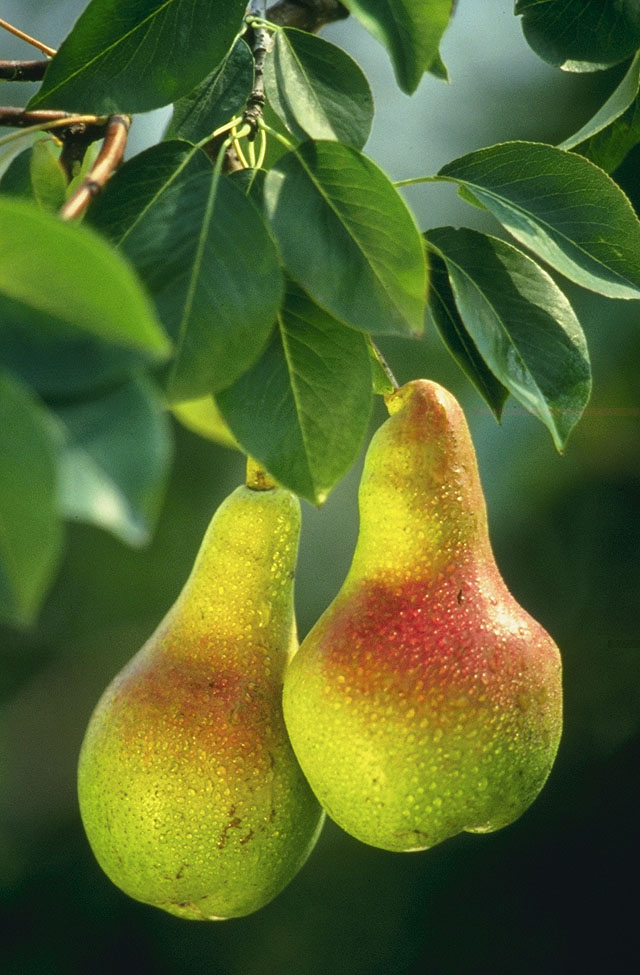
Seasonal Produce: Pears

With the looming descent of autumnal weather, a great many of my favorite fresh produces are hitting their peak seasons. Pumpkins, apples, cranberries and pomegranates are all prevalent from September on, but chief among these, in my humble opinion, are Pears. Literally dozens of varieties of this delicious fruit become readily available around this time of year, with new types appearing in your local market (even supermarket) from late September all the way through to February.


Pears have been a relative staple of the human diet the world over (particularly in cooler climates) since the days of antiquity, being known of and cultivated by the ancient Greeks & Romans. The fruit is mentioned several times in Pliny the Elder's 1st century text, Natural History, where he particularly noted their use in producing a variety of wine called Castomoniale. The 4th-century writer Palladius further mentions this beverage, citing in his Opus Agriculturae that Romans preferred it to wine made from apples.

What's more, one of the earliest known cookbooks - the 4th century work Apicus - lists several recipes for preparing the fruit as per the apparent Roman belief that pears were best enjoyed cooked & heavily-spiced (stewed in honey or cooked in a soufflé-like patina) rather than raw. Records similarly indicate that at the time of the Roman conquests of Gaul, the peoples there were already utilizing pears to produce both wine and a variation on hard (apple) cider. This tradition carried through the medieval period, spreading to England during the reign of Henry VIII, where the beverage acquired the name "Perry". Similarly, the spread of distillation around the same period brought about the delicious Eau de Vie de Poire.

However, for use in modern cocktails those crazy Romans may have been onto something with their notion of preparing pears - particularly with the use of spices. Depending on the variety, pears, while perfectly delicious raw, often have the kind of subtle flavor which can be enhanced by (or act as the perfect foil for) all manner of stronger spice flavors. Ginger, Cinnamon, Tarragon, Cardamom, Vanilla, Clove, Nutmeg, Anise, even Juniper and Saffron have all been combined with pears by chefs, both pastry & culinary, for many centuries clear through to the modern day. In keeping with that notion, might I suggest this delicious libation which carefully balances the silky texture and flavors of pear, the spice of ginger, and the botanicals of both Pimm's & Gin rather delightfully (©):

P & G Cocktail
1½ oz. Pimm's No. 1
½ oz. Plymouth Gin
2 oz. organic Pear nectar
¼ fresh d'Anjou Pear
2 dashes: Angostura bitters
Ginger beer
In a mixing glass muddle the fresh Pear with the Gin & bitters. Combine remaining ingredients (except Ginger beer) & shake with plenty of ice. Fine strain into a chimney glass and top with Ginger beer. Stir briefly and garnish with a slice of fresh Pear and a sliver of crystallized Ginger (optional).

Returning to our Roman friends' practice of stewing pears in honey & spices once more, one finds another great use for the fruit in libations. Poached pears, long a potent item in the pastry chef's arsenal, can be used to add sweetness, spice and flavor to any number of drinks which may be well-enhanced by any of those elements. At its most basic, poaching pears (or most any firm fruit) merely requires you to skin & remove the cores from the fruit before simmering for about twenty-five minutes in a 3:1 mixture of water & either sugar or honey. From there the sky is the limit: adding spices, citrus zest, wine, or most any other savory ingredient to the mix can result in some truly marvelous creations.

The great recipe for pears poached in Saffron-Vanilla syrup posted at Figs with Bri, for example, makes a fantastic addition (though a plain honey-poached one works fine too) to the following libation - itself a riff on the classic autumnal Stone Fence. Much like that venerable cocktail, one can use a commercially-available Perry (such as Woodchuck) or the adventurous can ferment their own by leaving a non-pasteurized Pear cider/nectar out in a cool, dark place for 5-6 days (uncovering occasionally to release the accumulated gasses). Either method will endow you with a dry, lightly-alcoholic and very tasty 'cider' which can be used to great effect in (©):

Perry's Mason
1¼ oz. Eau de Vie de Poire (Pear William)
¾ oz. Irish Whiskey (Redbreast or another full-flavored variety)
Perry cider (see above)
2-3 slices: Poached Pear
Combine spirits & poached Pear slices in a Highball glass half-filled with ice. Fill up with Perry, stir briefly and enjoy un-garnished & un-varnished.

Embracing Seasonal Flavors
With the growing popularity of fine-dining establishments, one doesn't need to delve into ancient history or even the kitchen to enjoy the taste of fresh pears in libations or cuisine. Great restaurants & bars all over the world have been embracing a seasonal outlook on fresh produce for quite some time - a concept which really brings some delicious, high-quality drinks and dishes to both bar & table. One such establishment is my favorite 'local: the highly-rated Catherine Lombardi's in downtown New Brunswick, New Jersey. The outspoken principles on fresh, local ingredients of co-owners Francis Schott and Mark Pascal (of Restaurant Guys Radio fame), together with a top-notch bar & kitchen-staff, regularly produce truly fantastic culinary creations, such as Mr. Schott's own (delicious) autumnal cocktail:

The Irish Twin
1½ oz. Jameson's Irish Whiskey
2 oz. organic Pear nectar
½ oz. Honey syrup (1:1 - Honey:Water)
1 dash: ground Cinnamon
1 slice: fresh Pear
Combine liquid ingredients and dash of Cinnamon in a mixing glass with lots of ice & shake well. Strain into a chilled cocktail glass & garnish with the slice of fresh Pear (dusted on one side with a little cinnamon).

If you find yourself in the New Jersey area sometime this Fall, a stop into New Brunswick and the beautiful bar at Lombardi's would not be amiss. Ask for an Irish Twin, perhaps an antipasta or two, and escape autumn's chill with some of the great produce of the season...

Cheers!

PS - For those of you gentle readers with some homebrewing experience who want to have a go at brewing a real Perry, the UK-based Real Cider and Perry Pages contain some excellent reading material on the topic...

Monday, September 22, 2008

Ramblin' On...

...and on, after a brief stopover on the topic of this month's Mixology Monday as well as a ferocious bar-room brawl against an inexplicable episode of writer's block, here she is (finally, you say) - part deux of my long-delayed vacation recap from the often-curious perspective of food & drink...


Istanbul, Turkey
Naturally, when planning this vacation, I had elected to take an excursion (arranged by the cruise) entitled "Cuisine & Bazaars of Istanbul". The tour began perilously (for me anyway) early in the morning, arriving in the Old City (where Istanbul was Constantinople) and walking through the marvel that is Galatasaray Square. Off this pedestrian-only street a multitude of confectionary shops, markets and other stores abound and the tour visited many of them, including a walk through the old Cicek Pasaji (once the Flower Market, the space is now filled with restaurants, coffeehouses & taverns) to reach Istanbul's outdoor Balik Pazari - the Fish & Produce market:

This long, narrow street is literally wall-to-wall with outdoor vendors, selling some of the best-looking produce & seafood I've yet seen. To give you a rough idea - those peaches pictured on the end were roughly the size of a grapefruit (and were almost outrageously juicy & delicious)! After a prolonged wander through the market (& a great deal of inner annoyance at the realization that customs would never let me bring anything sold here back home), the group proceeded back up through Galatasaray Square, stopping at a number of the confectionary shops for snacks and sweets, such as fresh Baklava & candied Almonds before boarding a bus for the short trip to:

The Spice Bazaar
Let me say this first - the Spice Bazaar is worth a trip to Turkey alone. A massive indoor & outdoor market frequented (unlike the infamous Grand Bazaar) by Turks & tourists alike, if it's used in cooking you can find it here. Inside the market I spent more than an hour wandering from vendor to vendor - shopping, haggling and enjoying a peculiar sales technique employed throughout Turkey - a cup of coffee or tea. Turkish Coffee or heavily-sweetened Black tea (both strongly-caffeinated beverages), are one of the first things a merchant here will offer should you even glance casually at his wares. One will be invited into the shop, shown a seat & a small tea glass or demitasse cup of either will summarily be brought to slowly savor while the vendor inquires as to what you should like to purchase (and fiercely haggles over the price).

While receiving this treatment I purchased many spices - Iranian Saffron (a gram of which costs scarcely $8 US!!), Black Cardamom, Coriander, Jasmine, Sahlep (ground Orchid root), Lime-linden, Galangal, Fennel, worldly blends like Ras al Hanout & Turkish Curry, dozens of dried Chiles and much more. The famed Turkish Mehmet Effendi Coffee is bagged here (I got a half-kilo) and in the outdoor market, where housewares are sold, one can find beautiful examples of Cezve (copper coffee pots). Likewise, perfumes, copper kitchenware, hand-woven carpets & blown-glass tea sets are available everywhere, as are the dozens of tea-blends enjoyed throughout the East. Needless to say, the place was a slice of heaven for me & there's a better-than-average chance that I might not have ever left if I only knew a bit of Turkish...

Kiraathane & Rakish Behavior
Following the tour & subsequent jaunts through the various Bazaars, being left with the option of several hours on my own in the city prior to boarding the ship, I thought to get a look at the quieter, less tourist-clogged areas. After wandering for short time towards the Old City, I stumbled upon a small back street which terminated at the coffeehouse, or kiraathane pictured at left. Though thirsty from walking, I thought of moving on - not wanting to push my caffeine-rush any further with yet another glass of coffee or tea (delicious though they may have been) - yet something, perhaps the atmosphere, kept my feet firmly planted. As I took a carpet-draped seat and the proprietor approached, I recalled there was libation particular to Turkey which I had not yet sampled - the native spirit called Raki.

Raki is one of the many anise-flavored spirits which brave souls enjoy throughout the world's varied cultures. Traditionally produced on a grape base (though newer examples are made with sugar beets or grain alcohols), Raki is a passing-strong libation most often enjoyed as a digestive in a method not dissimilar to Absinthe: mixed with ice water. Also similar to an Absinthe, when enjoyed in this manner Raki manifests the peculiar characteristic of a louche - meaning when added to water, the anise oils within form a hazy (pale white, in this case) cloud within the glass.

Having had Raki only once before (a sugar beet-based variety) back home, I naturally had to try the native grape variety. I ordered the drink with ice water, as well as a sampling of the traditional food accompaniment - a soft, white (deliciously-unpasteurized) sheep's cheese called Beyaz Peynir - not dissimilar to a mild Feta (just don't tell the Turks or Greeks I said that). Both were excellent and my leisurely enjoyment of the pair was increased by the presence of a group of street musicians - a flute, drum & fiddle trio - who had taken up not ten feet away. After savoring the combination and realizing I had more than enough time to linger, I ordered another - this time straight with a glass of Karkhade on the side (I was not bold enough to sample the traditional chaser to Raki ).

To my surprise the tart hibiscus tisane came unsweetened, but with a small dish of candied orange peel on the side, which the proprietor explained was for this purpose. On taking his advice, and with subsequent sips, I had a moment of epiphany (a rare occurrence, let me say) and taking up my small glass, combined a portion of the remaining Raki and Karkhade with an extra slice of the peel. It was sublime - tart floral flavors, complex bitter notes, with an almost Americano-like sweetness on the finish. Needless to say I enjoyed a fair number more of these, which, upon my departure made the return to the ship (on time no less!) more than a bit tricky. If you can find a Raki (preferably one made on a grape-base, i.e. not the ubiquitous Yeni brand), give one of these a try (©):

Kiraathane Cooler
2 oz. Raki
4½ oz. Karkhade, unsweetend (Jamaica works fine)
4-5 pieces: candied Orange peel
1 piece: Orange peel, pith removed (for garnish)
Briefly muddle the candied orange peel in the bottom of a Highball glass. Fill glass half-way with cracked ice, add remaining ingredients and stir briefly to chill. Flame Orange peel over the top & enjoy.
If you have one, cut this recipe down to a quarter & prepare in a tea glass as I originally did. To make the candied Orange peel, follow a recipe like this one.

Rome, Italy
Cocktail Bloggers Unite!
Years ago I had visited Rome, and consequently had seen a great many of the numerous historically & culturally-significant spots in the great city before. This made my (admittedly hastily) planned visit with Massimo "Maxologist" La Rocca of Listen to the Ice the ideal stop for me on my return visit. My (unfortunately brief) meeting with Max was a real pleasure - he came in on his day off to meet up with me! His gig at the beautiful, ultra-modern St. George Hotel is quite a swank one, as I saw on my impromptu tour of the place. I got to take a look at the terrace bar which is his province - complete with its' incredible rooftop view of some of Rome's most famous buildings - discussing infusions & tasting his (delicious) homemade ginger syrup while I was up there. Back downstairs in the hotel's garden lounge Max was quick to proffer one of his incredible signature libations: the Celeriac Cocktail, prepared as a long drink with a touch of egg white added.

As I had brought out a few homemade Bitters & Pimento Dram along, we discussed some uses for them (both potential & proven). As it turns out Max had something for me as well - a really tasty Italian Rhubarb Amaro called Zucca which I'd never seen before. He recommended it be mixed with a gentle application of a complex vanilla liqueur, mentioning Galliano specifically. Now I don't generally make much use of Galliano at home, but upon my return I recalled that I had made a Vanilla & Star Anise-infused syrup before departing - essentially a flavor profile similar to Galliano's, if a touch sweeter. So I played around with the proportions and came up with this pleasantly-bittersweet libation (©):

Rhome in a Day
¾ oz. Plymouth Gin
¾ oz. Zucca Rhubarb Amaro
½ oz. Vanilla & Star Anise Syrup (see below)
2 Tsp. fresh Lemon juice
1 Tsp. fresh Orange juice
Combine ingredients and stir well with plenty of ice. Strain into a chilled cocktail glass & enjoy.

Vanilla & Star Anise Syrup
1 Cup: white Sugar
1 Cup: Water
1x Madagascar Vanilla bean, split lengthwise
1x Star Anise pod, whole
Combine ingredients in a small saucepan and bring to a light simmer, stirring to dissolve the sugar. Remove from heat and allow to cool before transferring to a clean airtight container & adding ¼ oz. Vodka as a preservative. Allow to rest, agitating occasionally, for twelve hours before removing the Anise pod. Allow to rest for six days, agitating occasionally, before removing the Vanilla bean & bottling.

Many thanks again for the fabulous hospitality and phenomenal drink Max! For those of you gentle readers who have not checked out his bilingual cocktail blog or tried any of the inspired recipes he regularly posts there - get to it posthaste!

Marseilles, France
Arles - Perfectly Provençal
Much as with Rome, I had been to France once before - Paris specifically - yet let the record show that the culture of southern France is worlds removed from that of the north. The cuisine for example, while undeniably French, tends towards more Mediterranean leanings with a serious emphasis on fresh seafood and flavorful herbs like the omnipresent Lavender & Herbs de Provençe blend(s). The wines produced in this area and its' surrounding regions were already among my favorites, particularly vintages hailing from the Côtes du Provençe and nearby Côtes du Rhone appellations. This appreciation did nothing to prepare me for the incredible wines I would enjoy at the cozy Pour le Vin (whose list of specials for the day is pictured at left) in beautiful Arles, a small city dating to Roman times, deep in the heart of Provençe...

Let me preface this with an apology: my knowledge of wines & resulting ability to describe them remains extremely lacking (I often say I know just enough of wine to know precisely how little I know), yet I will try to convey some sense of the (excellent) ones I sampled. Beginning on comfortable ground, a paired flight of phenomenal, full-bodied Côtes du Provençe picked from the days' specials went down quite comfortably. Noticing that the number of previously-unknown (to me) appellations & vintages accounted for a majority of the menu, I quickly set about sampling several of these:

First came a tasting of hard-to-acquire (I was told the appellation is limited to a single vineyard) Bellet, produced largely from the region's Braquet grapes not far away, in the nearby city of Nice. Though heavy in body, the rich flavors I got of vanilla & blackberries were almost ethereal in nature - strong through to the finish before vanishing completely. The resulting experience so enthralled me that I ordered a full glass of the delicious red before even completing my tasting portion. After savoring the Le Braquet Bellet, I moved onto a tasting (& subsequent glass) of Domaine du Paternel Cassis Blanc, produced a short distance down the coast from where I sat. A wine I'd only ever heard about back in the 'States, Cassis Blanc is often described as a refreshing, flavorful - sometimes almost herbal - and full-bodied white wine. This description hardly does what my glass contained any justice...

Refreshingly sharp without being too dry, with nicely-rounded citrus (not dissimilar to grapefruit) tones throughout, this ranked among the best white wines I've ever tasted - a small & fairly exceptional list as I don't generally enjoy whites much. At or around this point I realized I had been indulging in a strictly 'liquid lunch', a fast which I broke with a light but thoroughly-delicious meal of Croûtes & Oysters served with the house Rouille. A thick, rusty-colored sauce, Rouille (which I mean to post on in the future) is not altogether different from a spicy Aioli, which made it a fantastic accompaniment to the Oysters and toast. My final glass of Cassis Blanc provided an incredibly refreshing and delicate foil for the spicy, flavorful food...

Le Cafe...?
Following the glorious wine and food, I journeyed around the tiny streets of Arles for a while until later in the day when I came across the following famous cafe. [The first person to correctly name this places' significance in the comments section will receive a bottle of my own homemade Honey Tangerine bitters.] Regardless of the quiet establishment's history, the strong coffee they served up was superb - particularly when sweetened by a splash of Orgeat syrup in a handily-named Cafe au Orgeat. My only regret about this particular stop was that I wasn't in Arles (or even Marseilles) at nightfall and so could not have gotten a much more apropos look at the cafe...

Les Baux de Provençe
Before my return to the ship, the final stop of the "Provençe on your Own" tour (read: glorified bus transport) I had undertaken was at the medieval village of Les Baux de Provençe. Built on a truly incredible location, this one-street tourist-town, complete with the ruins of a medieval castle, is precariously perched atop a limestone cliff, overlooking the scenic valley pictured at left. The shops here largely carry an interesting variety of art, homegoods and spices alongside artisanal spirits & liqueurs. Absinthe and Pastis were everywhere, with literally dozens of both lining the shelves of most every shop, as well as the numerous types of specialty glasses, spoons, fountains and drippers which facilitate their enjoyment. Though I contemplated purchasing one of the many beautiful blown-glass absinthe fountains I saw, I limited my purchases to several more interesting (& easier to transport home) items of local origin:

A pair of dry fruit liqueurs - Crème de Framboise (raspberry) & Crème de Mure (blackberry); an herbal liqueur - Crème de Lavandre (lavender); the rare aperitif RinQuinQuin (a peach quinquina); as well as a pair of flavored Pastis - Pastis de Violette (violet) & Pastis du Peche (peach). Upon tasting them back at home, all of these possess some very interesting flavors and characteristics - the Pastis in particular - which I will be certain to experiment with (& post about) in the future...

Barcelona, Spain
Though I was in Barcelona for only one full day after the ship disembarked, it certainly was a culinary dream of sorts, one whose brevity required me to enjoy it in a mad dash about the city. Barcelona is a wonderous city, particularly from an architectural and aesthetic standpoint, with a plethora of things to see and do - made simpler by the (genius) tourist bus lines which run preset routes through the city. A sort of combination multilingual tour-guide & taxi service, these brightly-colored buses take one nearly anywhere you would care to go, highlighting stops one may not have known of along the way & allowing one to see as much of the massive city as possible.

After a number of sightseeing stops, I disembarked near the famed beaches of the coastal city. The streets in this area are literally lined with small restaurants, cóctel bars and cafes. After glancing at various menus, I stopped in at an establishment called El Mundo Cafe ("the World Cafe") whose cóctel del día ("cocktail of the day" - the primary reason I stopped in) was listed as a sort of Añejo Highball, made with aged Havana Club rum & Marie Brizard Curaçao. Obviously, I started my lunch with one of these, enjoying an amuse bouche of local olives, gherkins and gibson onions in malt vinegar while I pondered the menu. I opted for a dish named Conejo y Allioli - rabbit braised with a side of the spiced Catalan Aioli - which I was amused to learn is referred to as "Allioli" in the region. It was delicious - tender and slightly gamey and the spicy sauce made a delightfully-flavored addition - the combination paired perfectly with the well-aged rum in my cocktail.

Dry Martini
After lunch I worked my way towards the central portion of the city with a purpose - a stop at the famed bar Dry Martini. Dimly-lit and quiet at the time of my late afternoon visit, this gorgeous, classy spot is lined from floor to ceiling in antique bar equipment, books and cocktail-artwork - making it a kind of museum of the bartender's craft. The specialty drinks served across its' long hardwood bar were excellent, a blend of classic recipes - Martinis, Frappes, Highballs - with modern interpretations on the above.
My first cóctel was naturally the namesake Dry Martini - prepared "fifty-fifty" in accordance with the sign (pictured at left) that crowns the antique cash register, detailing the recipe for all to see. Noticing an impressive number of variations on the classic Fizz or Tonic-based drinks, I opted for one of these next - imbibing a "Rumba Numba" - a tasty riff on the Gin Fizz, flavored Vanilla bean & a splash of Tonic. For my final drink, I enjoyed another of their modern signatures: the "Jalapeño Frappe", a delightfully-spicy beverage whose component ingredients sadly escaped my notice completely. After a final lingering look at the place - already starting to fill with well-dressed patrons - I headed back to my hotel to get ready for dinner...

El Cangrejo Loco
Unable to get a reservation on such short-notice at Dry Martini's highly-rated restaurant Speakeasy, I inquired with the hotel concierge for an alternative dinner spot. Though, to me, an unlikely name for a restaurant, "The Crazy Crab" would prove to far outstrip even the most glowing recommendations I received for it. I returned to the harbor area not far from where I had lunch to the last building along the Port Olímpic piers. What followed ranked among the top five meals of my entire life, no fooling:

As I gave the expansive menu a once-over, I asked the sommelier what cóctel, if any, he might recommend from the bar. By way of answer, he returned with a house specialty: a "Cava Cóctel" - a classic Champagne Cocktail with a twist - made as it was with a local Brut Cava. My meal began with an "Ibérico Sampler" - a plate containing portions of three Jamóns Ibérico de Bellota - cured from the thigh, shoulder & loin of a (free-ranging, acorn-fed) blackfooted pig and accompanied by a sharp unpasteurized cheese of Ewe's Milk. Next came another tapas plate - this one composed of alternating layers of thickly-sliced Foie Gras & paper-thin slivers of Veal, pan-seared together with a hint of Paprika, Cinnamon & Sea salt. Where the Foie left off and the Veal began I'm not quite certain, but I very nearly canceled my entree in favor of another plate of this. Thankfully I did not, for the main course - a Sucking (milk-fed) Leg of Lamb, braised with fresh Rosemary & Pistachios and served alongside Potatoes whipped with Allioli - soon arrived, much to my delight. Prior to dessert I enjoyed a glass of Havana Club 7 Años rum over ice, savoring it greatly until a dish of house-made ice cream - white & dark Chocolate in flavor - arrived with strong black coffee alongside...

With the close of that epic and truly incredible meal I shook the hand of the owner and the chef, thanked them profusely in halting Spanish and returned to my accomodations. Five o'clock, the next day brought an adventure of a far less pleasant variety - the long trip home (one which my luggage nearly didn't make). It was overall an absolutely incredible journey, one which I should like to make again in my life if at all possible, and I only hope that my rambling narrative has enabled some of you readers to have made it with me...

Cheers & Thanks!