Saturday, October 18, 2008

Seasonal Produce: Pumpkin

As the autumn season continues & more of my favorite examples of seasonal produce become prevalent, I was reminded of an experiment I had been contemplating for some months. Now before you start frantically searching for the back button (it's on the left), a few brief words. If you've been reading here for a while (or are one of the many new readers who have been trickling in from all corners of the earth - thanks by the way!), you've doubtlessly noted three things in or about my rambling articles:


1. I tend to wax poetic at times...alright all the time.
2. I'm more often than not rambling about (crazy) recipes which are, admittedly, a pain to actually make - no matter how delicious they might be.
3. Coming under the auspices of items 1 & 2, a fairly-lengthy article discussing regional variations on Orgeat syrup.


Well, at least for this little experiment - a continuation of the topics mentioned in #3 - I'll try to avoid the pitfalls of 1 and 2. As it is mid-October, I'm sure many of you are preparing for some manner of Halloween festivities, which will undoubtedly result in hacking up an otherwise-serviceable pumpkin. But what to do with all the insides? Make some pumpkin pie from the flesh of this seasonal delight? Sure (and a bloody fine idea that is), but what about the veritable pile of seeds you'll end up with?


One of the problems I failed to mention when discussing Orgeat variants like Horchata de Melón is that, while absolutely delicious, they tend to be inefficient to make. After all, how many seeds can one expect to extract from a watermelon or worse, a cucumber? In the following recipe, this problem is non-existent - even the smallest of pumpkins is nearly overflowing with seeds. Even better, if you mean to make a jack o'lantern in the next few weeks you'll have more of them on hand than you could shake a stick at. Simple, efficient & absolutely delicious - give this one a try (©):


Pumpkin Horchata
2¼ Cups: fresh Pumpkin seeds
¼ Cup: slivered Almonds
2½ Cups: Water
2¼ Cups: white Sugar
4 Tablespoons: Muscovado/brown Sugar
½ Teaspoon: ground Cinnamon
¼ Teaspoon: ground Nutmeg
¼ Teaspoon: ground Ginger
5x whole Cloves
1 pinch: Cayenne pepper
Pre-heat oven to 375°F. Wash the pumpkin seeds thoroughly in a colander or strainer, then pat dry. Spread seeds and Almonds in a single layer on a baking sheet & toast until fragrant. Process the (still-warm) toasted mixture in a food processor, shells & all until coarsely-ground. Combine this mixture with the spices and Water (reserve the Sugars for later) and refrigerate for approximately 4 hours. Strain the mixture through cheesecloth, pressing to extract as much liquid as possible. Re-combine the solids and liquid and steep again for another 4 hours; strain again. (For the strongest flavor; repeat the process once more.) Combine strained liquid with Sugars in a saucepan & bring to a very gentle simmer over medium-low heat (do not boil) until Sugars are dissolved. Cool, bottle and enjoy in the following libation:


Clever Jack Cocktail
1½ oz. Laird's 100° Bonded Apple Brandy
½ oz. Rye Whiskey (Old Overholt)
¾ oz. Pumpkin Horchata
½ oz. fresh Orange juice
1 Teaspoon fresh Lemon juice
Combine ingredients in a shaker with plenty of ice & shake well. Strain into a chilled cocktail glass & garnish with a flamed twist of Orange.


If you do give this syrup a go, be sure to pass along whatever cocktail recipe(s) you clever folks might come up with. Incidentally, if you mean to substitute this into an existing cocktail what calls for Orgeat, go a little heavier on the pour - its' slightly more delicate in flavor and sweetness that the aforementioned French stuff...

For my part, I'll be carting a bottle over to Jonathan Pogash's Elements of Mixology class tomorrow at the Astor Center in NYC to try & formulate some more uses for this delicious seasonal syrup. Then perhaps a quick jaunt over to Pegu to see what those clever lads can make of it...


Cheers & Enjoy!

Sunday, October 12, 2008

MxMo XXXII: Guilty Pleasures

This (only nominally) guilt-ridden installment of Mixology Monday is being hosted by Stevi over at Two at the Most. Her chosen theme? Guilty pleasures of course, or those 'cocktails' which are well-loved or enjoyed even though we know, or are just constantly told, are no good for us. This theme, undoubtedly chosen for just such a purpose, will almost assuredly result in no small amount of mockery across any number of cocktailian blogs, to say nothing of the already snarky dialogue peculiar to the Mixoloseum. Bring it on I say & we'll exchange remarks over a round (or five) of Irish Carbombs...

I don't quite know how guilty I am about enjoying this particular beverage, however politically-incorrect or tactless its' name & method of consumption may be. I love a good pint of heavy, as they say, and Guinness is a fine example. Likewise, I enjoy a drop of Whiskey, particularly the Irish varieties. As for the cream liqueur (Bailey's in this case), well maybe I'm a little guilty about that, but nobody's perfect.

The recipe, merely a variation on the venerable boilermaker, is outrageously simple. This, above all else, makes this beverage an especially easy choice when out on the town in an establishment of...questionable virtue. Incidentally, despite its universally Irish components, due to its' name this drink might not be the best thing to order in a "real" Irish bar (much like a "Black & Tan") - a bloody shame since the Guinness is always better in that sort of place:

The Irish Carbomb
½ oz. Jameson's Irish Whiskey
½ oz. Bailey's Irish Cream
12 oz. Guinness Stout
1x (sturdy) Pint Glass
1x (sturdy) Pony shotglass
Pour the Guinness into a chilled pint glass. In the pony, layer the spirits in the order presented. As quickly as you are able, carefully drop the shot into the pint glass - no spilling now! When the pony hits bottom, it's bottoms up - much like a (far more classy) Fizz, a Carbomb does not improve with time.

Best enjoyed with friends - preferably a whole dive bar's worth - with loud punk music (I prefer Rudie Can't Fail or Anarchy in the UK myself) blaring from the jukebox...

Cheers, enjoy & don't be too serious!

Monday, October 6, 2008

Seasonal Produce: Pears

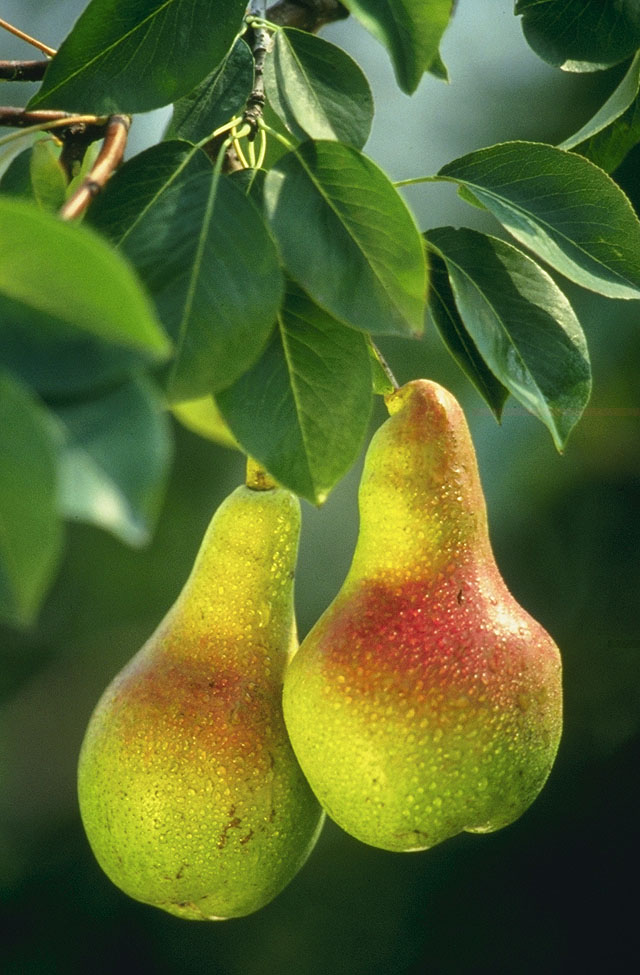
With the looming descent of autumnal weather, a great many of my favorite fresh produces are hitting their peak seasons. Pumpkins, apples, cranberries and pomegranates are all prevalent from September on, but chief among these, in my humble opinion, are Pears. Literally dozens of varieties of this delicious fruit become readily available around this time of year, with new types appearing in your local market (even supermarket) from late September all the way through to February.


Pears have been a relative staple of the human diet the world over (particularly in cooler climates) since the days of antiquity, being known of and cultivated by the ancient Greeks & Romans. The fruit is mentioned several times in Pliny the Elder's 1st century text, Natural History, where he particularly noted their use in producing a variety of wine called Castomoniale. The 4th-century writer Palladius further mentions this beverage, citing in his Opus Agriculturae that Romans preferred it to wine made from apples.

What's more, one of the earliest known cookbooks - the 4th century work Apicus - lists several recipes for preparing the fruit as per the apparent Roman belief that pears were best enjoyed cooked & heavily-spiced (stewed in honey or cooked in a soufflé-like patina) rather than raw. Records similarly indicate that at the time of the Roman conquests of Gaul, the peoples there were already utilizing pears to produce both wine and a variation on hard (apple) cider. This tradition carried through the medieval period, spreading to England during the reign of Henry VIII, where the beverage acquired the name "Perry". Similarly, the spread of distillation around the same period brought about the delicious Eau de Vie de Poire.

However, for use in modern cocktails those crazy Romans may have been onto something with their notion of preparing pears - particularly with the use of spices. Depending on the variety, pears, while perfectly delicious raw, often have the kind of subtle flavor which can be enhanced by (or act as the perfect foil for) all manner of stronger spice flavors. Ginger, Cinnamon, Tarragon, Cardamom, Vanilla, Clove, Nutmeg, Anise, even Juniper and Saffron have all been combined with pears by chefs, both pastry & culinary, for many centuries clear through to the modern day. In keeping with that notion, might I suggest this delicious libation which carefully balances the silky texture and flavors of pear, the spice of ginger, and the botanicals of both Pimm's & Gin rather delightfully (©):

P & G Cocktail
1½ oz. Pimm's No. 1
½ oz. Plymouth Gin
2 oz. organic Pear nectar
¼ fresh d'Anjou Pear
2 dashes: Angostura bitters
Ginger beer
In a mixing glass muddle the fresh Pear with the Gin & bitters. Combine remaining ingredients (except Ginger beer) & shake with plenty of ice. Fine strain into a chimney glass and top with Ginger beer. Stir briefly and garnish with a slice of fresh Pear and a sliver of crystallized Ginger (optional).

Returning to our Roman friends' practice of stewing pears in honey & spices once more, one finds another great use for the fruit in libations. Poached pears, long a potent item in the pastry chef's arsenal, can be used to add sweetness, spice and flavor to any number of drinks which may be well-enhanced by any of those elements. At its most basic, poaching pears (or most any firm fruit) merely requires you to skin & remove the cores from the fruit before simmering for about twenty-five minutes in a 3:1 mixture of water & either sugar or honey. From there the sky is the limit: adding spices, citrus zest, wine, or most any other savory ingredient to the mix can result in some truly marvelous creations.

The great recipe for pears poached in Saffron-Vanilla syrup posted at Figs with Bri, for example, makes a fantastic addition (though a plain honey-poached one works fine too) to the following libation - itself a riff on the classic autumnal Stone Fence. Much like that venerable cocktail, one can use a commercially-available Perry (such as Woodchuck) or the adventurous can ferment their own by leaving a non-pasteurized Pear cider/nectar out in a cool, dark place for 5-6 days (uncovering occasionally to release the accumulated gasses). Either method will endow you with a dry, lightly-alcoholic and very tasty 'cider' which can be used to great effect in (©):

Perry's Mason
1¼ oz. Eau de Vie de Poire (Pear William)
¾ oz. Irish Whiskey (Redbreast or another full-flavored variety)
Perry cider (see above)
2-3 slices: Poached Pear
Combine spirits & poached Pear slices in a Highball glass half-filled with ice. Fill up with Perry, stir briefly and enjoy un-garnished & un-varnished.

Embracing Seasonal Flavors
With the growing popularity of fine-dining establishments, one doesn't need to delve into ancient history or even the kitchen to enjoy the taste of fresh pears in libations or cuisine. Great restaurants & bars all over the world have been embracing a seasonal outlook on fresh produce for quite some time - a concept which really brings some delicious, high-quality drinks and dishes to both bar & table. One such establishment is my favorite 'local: the highly-rated Catherine Lombardi's in downtown New Brunswick, New Jersey. The outspoken principles on fresh, local ingredients of co-owners Francis Schott and Mark Pascal (of Restaurant Guys Radio fame), together with a top-notch bar & kitchen-staff, regularly produce truly fantastic culinary creations, such as Mr. Schott's own (delicious) autumnal cocktail:

The Irish Twin
1½ oz. Jameson's Irish Whiskey
2 oz. organic Pear nectar
½ oz. Honey syrup (1:1 - Honey:Water)
1 dash: ground Cinnamon
1 slice: fresh Pear
Combine liquid ingredients and dash of Cinnamon in a mixing glass with lots of ice & shake well. Strain into a chilled cocktail glass & garnish with the slice of fresh Pear (dusted on one side with a little cinnamon).

If you find yourself in the New Jersey area sometime this Fall, a stop into New Brunswick and the beautiful bar at Lombardi's would not be amiss. Ask for an Irish Twin, perhaps an antipasta or two, and escape autumn's chill with some of the great produce of the season...

Cheers!

PS - For those of you gentle readers with some homebrewing experience who want to have a go at brewing a real Perry, the UK-based Real Cider and Perry Pages contain some excellent reading material on the topic...

Sunday, September 28, 2008

Only Funkin'

It sometimes seems that those of us who write cocktail blogs are especially prone to following similar lines of booze-soaked thinking. I sometimes think it must be some sort of collective-subconscious inspired in part by our prodigious drinking habits...

Case in point - I embarked upon this post with the aim of writing about a certain pair of Tiki cocktails of which I am rather fond when, hey presto, I check my blog reader to see that Tiare - the fabulously-talented mixologist from A Mountain of Crushed Ice - has beat me to the punchbowl as it were. Her research & descriptions of those classic cocktails, the Dr. Funk and Funk's Son specifically, are both spot-on and well-done (as always). That she prepared the drinks in a pair of beautifully-executed ice towers (!), makes her post an incredibly hard act to follow. Nevertheless, I'll make an attempt to contribute something to the topic of the inestimable Doctor Funk...

In my recent and fairly long-winded vacation recap, I mentioned a number of spirits I had acquired in my travels. One of these was a French Pastis flavored with Violets - an interesting spirit of 45% ABV which reminds me considerably of a combination of the best elements of both Herbsaint and Crème de Violette. After getting a feel for its strength & (very) pleasant flavor, I began searching for a use for the stuff in cocktails. Despite a few marginal successes with some recipes from the Savoy cocktail book, the savory use of Absinthe/Pastis as an addition to many of Tiki barman Donn Beach's libations continued to spring to mind...

One of the finest examples of this modifier is the good Samoan doctor's cocktail, which Trader Vic speculated was originally invented to cure the cathard (the loss of ones' mind from the heat). After a bit of experimentation with the various recipes for the original, alongside a variety of substitutions for different ingredients, I settled with a riff on the (slightly-simplified) Dr. Funk recipe which Jeff "Beachbum" Berry prepared for an episode of The Cocktail Spirit filmed at the close of this year's Tales of the Cocktail. Maybe there is something to this boozy collective-subconscious thing after all? In any case, here she is, a very funky libation named after an old song by another hard act to follow - Bad Manners (©):

Only Funkin'
1½ oz. flavorful white Rum (Rhum Barbancourt white)
¾ Tsp. Pastis au Violette
¾ Tsp. Hibiscus Grenadine
¾ oz. fresh Lemon juice
¾ oz. Violet "Tea" Syrup (see below)
1 oz. Seltzer
2 Tsp. heavy dark Rum (Cruzan Blackstrap)
Combine all ingredients except Seltzer & dark Rum in a cocktail shaker filled with cracked ice. Shake well & strain into a chimney glass ¾-filled with crushed ice. Top with Seltzer, give a brief stir and float the dark Rum on top, adding more crushed ice if necessary. Garnish with a long twist of Lemon & an edible Violet.

Violet "Tea" Syrup
1 Cup: white Sugar
¾ Cup: Water
2½ Tablespoons: Blue Violet Herb Mix
1 Tsp. dried Hibiscus flowers, coarsely ground
Combine ingredients in a saucepan & bring to a gentle simmer over medium-low heat, stirring to dissolve the sugar. Simmer for five minutes & remove from heat. Allow Violet Mixture to steep until liquid cools to room temperature before fine-straining out solids & bottling (a small tea ball/infuser will minimize this step considerably).

Can't find a Violet-flavored Pastis or get ahold of the required herbal blend? The following substitutions work fairly well & produce almost the same beverage with only marginally more work. For the Violet Pastis, a mixture of approximately 2/3 Herbsaint & 1/3 Crème de Violette is fine. For the Violet "Tea" Syrup, a 3:1 blend of Monin Violet Syrup (or an equivalent commercial syrup) with strong Green tea will more or less replicate the flavor you're seeking...

Cheers & Enjoy!

Monday, September 22, 2008

Ramblin' On...

...and on, after a brief stopover on the topic of this month's Mixology Monday as well as a ferocious bar-room brawl against an inexplicable episode of writer's block, here she is (finally, you say) - part deux of my long-delayed vacation recap from the often-curious perspective of food & drink...


Istanbul, Turkey
Naturally, when planning this vacation, I had elected to take an excursion (arranged by the cruise) entitled "Cuisine & Bazaars of Istanbul". The tour began perilously (for me anyway) early in the morning, arriving in the Old City (where Istanbul was Constantinople) and walking through the marvel that is Galatasaray Square. Off this pedestrian-only street a multitude of confectionary shops, markets and other stores abound and the tour visited many of them, including a walk through the old Cicek Pasaji (once the Flower Market, the space is now filled with restaurants, coffeehouses & taverns) to reach Istanbul's outdoor Balik Pazari - the Fish & Produce market:

This long, narrow street is literally wall-to-wall with outdoor vendors, selling some of the best-looking produce & seafood I've yet seen. To give you a rough idea - those peaches pictured on the end were roughly the size of a grapefruit (and were almost outrageously juicy & delicious)! After a prolonged wander through the market (& a great deal of inner annoyance at the realization that customs would never let me bring anything sold here back home), the group proceeded back up through Galatasaray Square, stopping at a number of the confectionary shops for snacks and sweets, such as fresh Baklava & candied Almonds before boarding a bus for the short trip to:

The Spice Bazaar
Let me say this first - the Spice Bazaar is worth a trip to Turkey alone. A massive indoor & outdoor market frequented (unlike the infamous Grand Bazaar) by Turks & tourists alike, if it's used in cooking you can find it here. Inside the market I spent more than an hour wandering from vendor to vendor - shopping, haggling and enjoying a peculiar sales technique employed throughout Turkey - a cup of coffee or tea. Turkish Coffee or heavily-sweetened Black tea (both strongly-caffeinated beverages), are one of the first things a merchant here will offer should you even glance casually at his wares. One will be invited into the shop, shown a seat & a small tea glass or demitasse cup of either will summarily be brought to slowly savor while the vendor inquires as to what you should like to purchase (and fiercely haggles over the price).

While receiving this treatment I purchased many spices - Iranian Saffron (a gram of which costs scarcely $8 US!!), Black Cardamom, Coriander, Jasmine, Sahlep (ground Orchid root), Lime-linden, Galangal, Fennel, worldly blends like Ras al Hanout & Turkish Curry, dozens of dried Chiles and much more. The famed Turkish Mehmet Effendi Coffee is bagged here (I got a half-kilo) and in the outdoor market, where housewares are sold, one can find beautiful examples of Cezve (copper coffee pots). Likewise, perfumes, copper kitchenware, hand-woven carpets & blown-glass tea sets are available everywhere, as are the dozens of tea-blends enjoyed throughout the East. Needless to say, the place was a slice of heaven for me & there's a better-than-average chance that I might not have ever left if I only knew a bit of Turkish...

Kiraathane & Rakish Behavior
Following the tour & subsequent jaunts through the various Bazaars, being left with the option of several hours on my own in the city prior to boarding the ship, I thought to get a look at the quieter, less tourist-clogged areas. After wandering for short time towards the Old City, I stumbled upon a small back street which terminated at the coffeehouse, or kiraathane pictured at left. Though thirsty from walking, I thought of moving on - not wanting to push my caffeine-rush any further with yet another glass of coffee or tea (delicious though they may have been) - yet something, perhaps the atmosphere, kept my feet firmly planted. As I took a carpet-draped seat and the proprietor approached, I recalled there was libation particular to Turkey which I had not yet sampled - the native spirit called Raki.

Raki is one of the many anise-flavored spirits which brave souls enjoy throughout the world's varied cultures. Traditionally produced on a grape base (though newer examples are made with sugar beets or grain alcohols), Raki is a passing-strong libation most often enjoyed as a digestive in a method not dissimilar to Absinthe: mixed with ice water. Also similar to an Absinthe, when enjoyed in this manner Raki manifests the peculiar characteristic of a louche - meaning when added to water, the anise oils within form a hazy (pale white, in this case) cloud within the glass.

Having had Raki only once before (a sugar beet-based variety) back home, I naturally had to try the native grape variety. I ordered the drink with ice water, as well as a sampling of the traditional food accompaniment - a soft, white (deliciously-unpasteurized) sheep's cheese called Beyaz Peynir - not dissimilar to a mild Feta (just don't tell the Turks or Greeks I said that). Both were excellent and my leisurely enjoyment of the pair was increased by the presence of a group of street musicians - a flute, drum & fiddle trio - who had taken up not ten feet away. After savoring the combination and realizing I had more than enough time to linger, I ordered another - this time straight with a glass of Karkhade on the side (I was not bold enough to sample the traditional chaser to Raki ).

To my surprise the tart hibiscus tisane came unsweetened, but with a small dish of candied orange peel on the side, which the proprietor explained was for this purpose. On taking his advice, and with subsequent sips, I had a moment of epiphany (a rare occurrence, let me say) and taking up my small glass, combined a portion of the remaining Raki and Karkhade with an extra slice of the peel. It was sublime - tart floral flavors, complex bitter notes, with an almost Americano-like sweetness on the finish. Needless to say I enjoyed a fair number more of these, which, upon my departure made the return to the ship (on time no less!) more than a bit tricky. If you can find a Raki (preferably one made on a grape-base, i.e. not the ubiquitous Yeni brand), give one of these a try (©):

Kiraathane Cooler
2 oz. Raki
4½ oz. Karkhade, unsweetend (Jamaica works fine)
4-5 pieces: candied Orange peel
1 piece: Orange peel, pith removed (for garnish)
Briefly muddle the candied orange peel in the bottom of a Highball glass. Fill glass half-way with cracked ice, add remaining ingredients and stir briefly to chill. Flame Orange peel over the top & enjoy.
If you have one, cut this recipe down to a quarter & prepare in a tea glass as I originally did. To make the candied Orange peel, follow a recipe like this one.

Rome, Italy
Cocktail Bloggers Unite!
Years ago I had visited Rome, and consequently had seen a great many of the numerous historically & culturally-significant spots in the great city before. This made my (admittedly hastily) planned visit with Massimo "Maxologist" La Rocca of Listen to the Ice the ideal stop for me on my return visit. My (unfortunately brief) meeting with Max was a real pleasure - he came in on his day off to meet up with me! His gig at the beautiful, ultra-modern St. George Hotel is quite a swank one, as I saw on my impromptu tour of the place. I got to take a look at the terrace bar which is his province - complete with its' incredible rooftop view of some of Rome's most famous buildings - discussing infusions & tasting his (delicious) homemade ginger syrup while I was up there. Back downstairs in the hotel's garden lounge Max was quick to proffer one of his incredible signature libations: the Celeriac Cocktail, prepared as a long drink with a touch of egg white added.

As I had brought out a few homemade Bitters & Pimento Dram along, we discussed some uses for them (both potential & proven). As it turns out Max had something for me as well - a really tasty Italian Rhubarb Amaro called Zucca which I'd never seen before. He recommended it be mixed with a gentle application of a complex vanilla liqueur, mentioning Galliano specifically. Now I don't generally make much use of Galliano at home, but upon my return I recalled that I had made a Vanilla & Star Anise-infused syrup before departing - essentially a flavor profile similar to Galliano's, if a touch sweeter. So I played around with the proportions and came up with this pleasantly-bittersweet libation (©):

Rhome in a Day
¾ oz. Plymouth Gin
¾ oz. Zucca Rhubarb Amaro
½ oz. Vanilla & Star Anise Syrup (see below)
2 Tsp. fresh Lemon juice
1 Tsp. fresh Orange juice
Combine ingredients and stir well with plenty of ice. Strain into a chilled cocktail glass & enjoy.

Vanilla & Star Anise Syrup
1 Cup: white Sugar
1 Cup: Water
1x Madagascar Vanilla bean, split lengthwise
1x Star Anise pod, whole
Combine ingredients in a small saucepan and bring to a light simmer, stirring to dissolve the sugar. Remove from heat and allow to cool before transferring to a clean airtight container & adding ¼ oz. Vodka as a preservative. Allow to rest, agitating occasionally, for twelve hours before removing the Anise pod. Allow to rest for six days, agitating occasionally, before removing the Vanilla bean & bottling.

Many thanks again for the fabulous hospitality and phenomenal drink Max! For those of you gentle readers who have not checked out his bilingual cocktail blog or tried any of the inspired recipes he regularly posts there - get to it posthaste!

Marseilles, France
Arles - Perfectly Provençal
Much as with Rome, I had been to France once before - Paris specifically - yet let the record show that the culture of southern France is worlds removed from that of the north. The cuisine for example, while undeniably French, tends towards more Mediterranean leanings with a serious emphasis on fresh seafood and flavorful herbs like the omnipresent Lavender & Herbs de Provençe blend(s). The wines produced in this area and its' surrounding regions were already among my favorites, particularly vintages hailing from the Côtes du Provençe and nearby Côtes du Rhone appellations. This appreciation did nothing to prepare me for the incredible wines I would enjoy at the cozy Pour le Vin (whose list of specials for the day is pictured at left) in beautiful Arles, a small city dating to Roman times, deep in the heart of Provençe...

Let me preface this with an apology: my knowledge of wines & resulting ability to describe them remains extremely lacking (I often say I know just enough of wine to know precisely how little I know), yet I will try to convey some sense of the (excellent) ones I sampled. Beginning on comfortable ground, a paired flight of phenomenal, full-bodied Côtes du Provençe picked from the days' specials went down quite comfortably. Noticing that the number of previously-unknown (to me) appellations & vintages accounted for a majority of the menu, I quickly set about sampling several of these:

First came a tasting of hard-to-acquire (I was told the appellation is limited to a single vineyard) Bellet, produced largely from the region's Braquet grapes not far away, in the nearby city of Nice. Though heavy in body, the rich flavors I got of vanilla & blackberries were almost ethereal in nature - strong through to the finish before vanishing completely. The resulting experience so enthralled me that I ordered a full glass of the delicious red before even completing my tasting portion. After savoring the Le Braquet Bellet, I moved onto a tasting (& subsequent glass) of Domaine du Paternel Cassis Blanc, produced a short distance down the coast from where I sat. A wine I'd only ever heard about back in the 'States, Cassis Blanc is often described as a refreshing, flavorful - sometimes almost herbal - and full-bodied white wine. This description hardly does what my glass contained any justice...

Refreshingly sharp without being too dry, with nicely-rounded citrus (not dissimilar to grapefruit) tones throughout, this ranked among the best white wines I've ever tasted - a small & fairly exceptional list as I don't generally enjoy whites much. At or around this point I realized I had been indulging in a strictly 'liquid lunch', a fast which I broke with a light but thoroughly-delicious meal of Croûtes & Oysters served with the house Rouille. A thick, rusty-colored sauce, Rouille (which I mean to post on in the future) is not altogether different from a spicy Aioli, which made it a fantastic accompaniment to the Oysters and toast. My final glass of Cassis Blanc provided an incredibly refreshing and delicate foil for the spicy, flavorful food...

Le Cafe...?
Following the glorious wine and food, I journeyed around the tiny streets of Arles for a while until later in the day when I came across the following famous cafe. [The first person to correctly name this places' significance in the comments section will receive a bottle of my own homemade Honey Tangerine bitters.] Regardless of the quiet establishment's history, the strong coffee they served up was superb - particularly when sweetened by a splash of Orgeat syrup in a handily-named Cafe au Orgeat. My only regret about this particular stop was that I wasn't in Arles (or even Marseilles) at nightfall and so could not have gotten a much more apropos look at the cafe...

Les Baux de Provençe
Before my return to the ship, the final stop of the "Provençe on your Own" tour (read: glorified bus transport) I had undertaken was at the medieval village of Les Baux de Provençe. Built on a truly incredible location, this one-street tourist-town, complete with the ruins of a medieval castle, is precariously perched atop a limestone cliff, overlooking the scenic valley pictured at left. The shops here largely carry an interesting variety of art, homegoods and spices alongside artisanal spirits & liqueurs. Absinthe and Pastis were everywhere, with literally dozens of both lining the shelves of most every shop, as well as the numerous types of specialty glasses, spoons, fountains and drippers which facilitate their enjoyment. Though I contemplated purchasing one of the many beautiful blown-glass absinthe fountains I saw, I limited my purchases to several more interesting (& easier to transport home) items of local origin:

A pair of dry fruit liqueurs - Crème de Framboise (raspberry) & Crème de Mure (blackberry); an herbal liqueur - Crème de Lavandre (lavender); the rare aperitif RinQuinQuin (a peach quinquina); as well as a pair of flavored Pastis - Pastis de Violette (violet) & Pastis du Peche (peach). Upon tasting them back at home, all of these possess some very interesting flavors and characteristics - the Pastis in particular - which I will be certain to experiment with (& post about) in the future...

Barcelona, Spain
Though I was in Barcelona for only one full day after the ship disembarked, it certainly was a culinary dream of sorts, one whose brevity required me to enjoy it in a mad dash about the city. Barcelona is a wonderous city, particularly from an architectural and aesthetic standpoint, with a plethora of things to see and do - made simpler by the (genius) tourist bus lines which run preset routes through the city. A sort of combination multilingual tour-guide & taxi service, these brightly-colored buses take one nearly anywhere you would care to go, highlighting stops one may not have known of along the way & allowing one to see as much of the massive city as possible.

After a number of sightseeing stops, I disembarked near the famed beaches of the coastal city. The streets in this area are literally lined with small restaurants, cóctel bars and cafes. After glancing at various menus, I stopped in at an establishment called El Mundo Cafe ("the World Cafe") whose cóctel del día ("cocktail of the day" - the primary reason I stopped in) was listed as a sort of Añejo Highball, made with aged Havana Club rum & Marie Brizard Curaçao. Obviously, I started my lunch with one of these, enjoying an amuse bouche of local olives, gherkins and gibson onions in malt vinegar while I pondered the menu. I opted for a dish named Conejo y Allioli - rabbit braised with a side of the spiced Catalan Aioli - which I was amused to learn is referred to as "Allioli" in the region. It was delicious - tender and slightly gamey and the spicy sauce made a delightfully-flavored addition - the combination paired perfectly with the well-aged rum in my cocktail.

Dry Martini
After lunch I worked my way towards the central portion of the city with a purpose - a stop at the famed bar Dry Martini. Dimly-lit and quiet at the time of my late afternoon visit, this gorgeous, classy spot is lined from floor to ceiling in antique bar equipment, books and cocktail-artwork - making it a kind of museum of the bartender's craft. The specialty drinks served across its' long hardwood bar were excellent, a blend of classic recipes - Martinis, Frappes, Highballs - with modern interpretations on the above.
My first cóctel was naturally the namesake Dry Martini - prepared "fifty-fifty" in accordance with the sign (pictured at left) that crowns the antique cash register, detailing the recipe for all to see. Noticing an impressive number of variations on the classic Fizz or Tonic-based drinks, I opted for one of these next - imbibing a "Rumba Numba" - a tasty riff on the Gin Fizz, flavored Vanilla bean & a splash of Tonic. For my final drink, I enjoyed another of their modern signatures: the "Jalapeño Frappe", a delightfully-spicy beverage whose component ingredients sadly escaped my notice completely. After a final lingering look at the place - already starting to fill with well-dressed patrons - I headed back to my hotel to get ready for dinner...

El Cangrejo Loco
Unable to get a reservation on such short-notice at Dry Martini's highly-rated restaurant Speakeasy, I inquired with the hotel concierge for an alternative dinner spot. Though, to me, an unlikely name for a restaurant, "The Crazy Crab" would prove to far outstrip even the most glowing recommendations I received for it. I returned to the harbor area not far from where I had lunch to the last building along the Port Olímpic piers. What followed ranked among the top five meals of my entire life, no fooling:

As I gave the expansive menu a once-over, I asked the sommelier what cóctel, if any, he might recommend from the bar. By way of answer, he returned with a house specialty: a "Cava Cóctel" - a classic Champagne Cocktail with a twist - made as it was with a local Brut Cava. My meal began with an "Ibérico Sampler" - a plate containing portions of three Jamóns Ibérico de Bellota - cured from the thigh, shoulder & loin of a (free-ranging, acorn-fed) blackfooted pig and accompanied by a sharp unpasteurized cheese of Ewe's Milk. Next came another tapas plate - this one composed of alternating layers of thickly-sliced Foie Gras & paper-thin slivers of Veal, pan-seared together with a hint of Paprika, Cinnamon & Sea salt. Where the Foie left off and the Veal began I'm not quite certain, but I very nearly canceled my entree in favor of another plate of this. Thankfully I did not, for the main course - a Sucking (milk-fed) Leg of Lamb, braised with fresh Rosemary & Pistachios and served alongside Potatoes whipped with Allioli - soon arrived, much to my delight. Prior to dessert I enjoyed a glass of Havana Club 7 Años rum over ice, savoring it greatly until a dish of house-made ice cream - white & dark Chocolate in flavor - arrived with strong black coffee alongside...

With the close of that epic and truly incredible meal I shook the hand of the owner and the chef, thanked them profusely in halting Spanish and returned to my accomodations. Five o'clock, the next day brought an adventure of a far less pleasant variety - the long trip home (one which my luggage nearly didn't make). It was overall an absolutely incredible journey, one which I should like to make again in my life if at all possible, and I only hope that my rambling narrative has enabled some of you readers to have made it with me...

Cheers & Thanks!

Monday, September 15, 2008

MxMo XXXI: Fast Times & Hot Drinks

This month's installment of Mixology Monday is hosted by the folks over at Bibulo.us whose rather inspired theme - Cocktails of the 19th Century - combines two of my favorite topics: classic libations and history! Hat's off to Joe & Dina for choosing such an interesting topic...

Despite a rather peculiar hot and humid turn of the weather hereabouts, the evenings have started to grow decidedly chillly, (as is right & proper for mid-September if I do say so) particularly this evening. And so, in anticipation of the many cold nights yet to come while contributing to the theme of this MxMo, I reasoned to discuss a popular hot drink of the period in question - the Whisky Skin.

The recipe for a Scotch Whiskey Skin, as well as the Columbia Skin (as it was called for in Boston) first appears in Jerry Thomas' 1862 How to Mix Drinks, though it was apparently well-known some time prior to this publication. As noted in David Wondrich's marvelously well-researched work Imbibe! the drink is almost assuredly Irish in origin - "a small version on the almost-lemonless punch popular there" - and it is first referenced in an 1854 printing of the Brooklyn Daily Eagle newspaper.

A rather simple warming beverage consisting of Scotch whisky (likely a blended variety, which was most popular at the close of the 19th century), a long spiral of Lemon peel & plain boiling-hot water. Straightforward enough, and differing from the similarly-popular Hot Toddy only in the addition of the Lemon peel. While fairly soothing due to it's heat, and tasty if you enjoy the milder flavor of the Scotch you use, the drink is just that - a measure of warm blended whisky adulterated by some Lemon oil.

However, in the revised 1887 edition of Thomas' work, the (unknown) revising author specifies alternately Glenlivet or a peaty Islay Scotch for the 'Skin (both improvements on a blended variety) while also adding a small measure of sugar to the recipe. Likewise, the 1887 also presented an additional variation on the beverage - the Irish Whiskey Skin, similarly prepared with the aforementioned 'lump of sugar'. These revisions combined produce a warming drink which in my opinion (as well as Dr. Wondrich's, it seems) is a vast improvement on the original.

Of equal interest, the Whiskey Skin appears to be a drink which is particularly well-steeped in the violence associated with the fast times of the turn-of-the century. As Professor Wondrich describes in Imbibe!, the second recorded mention of the drink comes from the testimony of one Richard Stark, a young bartender at an establishment off Broadway in 1855 who had a steaming-hot 'Skin flung into his face by a customer. The (difficult, to say the least!) customer, one Richard "Pargene" McLaughlin would later shoot Mr. Stark's employer three times in a scuffle at the bar of the Stanwix Hotel. Mr. Wondrich also notes that further violent behavior involving the Whiskey Skin included it's appearance in Our American Cousin, the play at which President Abe Lincoln was shot. Finally, the drink makes an appearance in several works of prose, most notably a colorful poem entitled "The Mystery of Gilgal", by John Hay included in the 1912 Yale Book of American Verse. The work details an unknown order for a 'Skin, which after some debate by the establishment's patrons, sparks a rather lively knife & gunfight amongst the same. The author humorously closes with the remark that he never did find out "who got the Whisky Skin".

It was me. Though hardly a cause for outright violence, in preparing this drink, I realized I lacked the necessary Scotch - having only a blended variety on hand - but that I did have a bottle of the (delicious) pot-stilled Redbreast Irish Whiskey. And so I prepared (and greatly enjoyed) the following:

Irish Whiskey Skin
2 oz. Irish Whiskey (preferably pot-stilled)

1½ Tsp: Demerara Sugar
Peel of 1 small Lemon, pith removed
Combine the sugar & Lemon peel in a pre-warmed Hot Toddy or Irish Coffee glass. Fill halfway with boiling water, add Whiskey and stir. Serve with a spoon & enjoy while steaming hot.

Cheers!

PS - Don't mind this post's URL title - I had originally thought to write on one of my favorite cold drinks of the 19th century - the Japanese Cocktail - but TraderTiki had that one well sewn up long before I began the post.

Sunday, August 31, 2008

Home Again, Home Again...

Jiggity-Jig...


But from where from you ask? A nice jaunt around the various & sundry ports of call of the Mediterranean with Princess Cruise lines. Starting in Italy at the docks of Venice, the trip lasted twelve days and terminated in the new Mecca of cuisine: Barcelona, Spain with a great many fascinating, if brief, stops along the way. More on those in my next post (hey, there's quite a bit to remember), first a brief look at my accomodations (from a food & drink standpoint, of course) on the trip...

The Boat
Strictly speaking, more of a floating hotel with a propeller than a ship, the Emerald Princess was truly a massive piece of work, with space for well over 2000 passengers and over 1000 crew members from a diverse mix of countries. As we sailed from Europe, the majority of the passengers hailed from various locales therein; onboard I heard a plethora of languages being spoken - everything from Spanish and Italian to Russian. The ship's impressive facillities included a library, casino (wherein I lost a fair bit), numerous swimming pools, a nightclub (loud, neon & flash, just like any on land), more than a dozen unique bars & lounges and four (immense) dining rooms (as well as a pair of independent restaurants). While not in port, I occupied myself with a variety of activities, among the most interesting of which was a tour of one of the ship's four main galleys (any one of which occupies a similar square footage equivalent to that of my home):

Onboard most any cruise line, as a part of the price of admission, fairly ridiculous quantities of food are made freely available just about 24 hours a day. And somehow, despite such massive volumes of cuisine being served up, quality-wise, it's by-and-large both very good & very well-prepared.

To give you some idea of these quantities, the ship stocks somewhere between 110 and 115 tons of foodstuffs for each voyage! Daily preparations & requirements, on average, include *7000 lbs. of fresh fruit, 2100 lbs. of beef, 1700lbs. of flour (for bread alone, nevermind pastry), 550 Gal of soup and 500 lbs. of Pasta! Now, I've worked in catering & at busy restaurants before, yet even after a tour of the gleaming galley I only have the vaguest notion of how they put forth such high-quality food for roughly 3000 people day-in & out. The best I could come up with was that in addition to well-trained personel and state-of-the art equipment, they (like any successful kitchen) have a tried & true system which is followed to the letter.

All that soup for instance, would be prepared in an industrial apparatus like the ones pictured at left - each capable of cooking over seventy-six gallons at a go. Dinner service is a la carte, with a number of predetermined selections from which to choose, so dishes (with the exception of meat cooked to order) are prep-cooked somewhat in advance of the dinner times (which are more or less set under two seperate seatings) before being placed into temperature-controlled cabinets like the ones pictured here. Long rows of finishing, plating & garnish stations spanning the rear of these containers provide the last-minute touches to individual orders before they are brought to table. And if should you desire a drink with dinner, the point-of-sale system used by the dining room staff calls beverages back to one of two (caged) service bars in each galley, which brings us to the next part of my review - the drinks!

Now, with the cuisine being generally great, I have to say that I was shocked & disappointed to find the bar service more than lacking in many regards. What struck me as particularly shocking was the dichotomy of product qualities. Barring small differences between individual bars & lounges, based largely on theme, every bar had essentially the same range of spirits and mixers available. While hardly exhaustive, I was pleasantly surprised to see Pimm's No. 1, Appleton's V/X Rum, Campari, Leblon Cachaca, Simple syrup (made daily), Passionfruit & Raspberry purées by Funkin, Pomegranate syrup (used for Grenadine) & Angostura bitters at every bar. The bartenders were all friendly, each had a great patter & most seemed to know their spirits more or less thoroughly...

...yet there were no fresh juices *(despite the presence of some 70,000lbs. of fresh fruit on board), only Lime and Lemon pre-mixes, miniscule twists of citrus cut days prior were casually tossed into drinks with nary a twisting motion to be seen, the (already wet) tired ice used to prepare a drink was casually poured into the glass (despite the uniform presence of hawthorne strainers). Even worse, what passed for shaking a drink wouldn't even qualify as 'rocking them to sleep', much less 'waking them up', as the late Harry Craddock would say. Everything except neat spirits, was free-poured despite the uniform presence of jiggers and while glassware was stored in refrigerated units, the lack of a properly-chilled, diluted (or even measured) beverage within made cocktails more or less...unpleasant.

I visited each of the ship's bars to try and determine if perhaps there was a well-trained 'tender, one willing to make the effort. The folks in the "Martini Bar" were fairly appalled at my request of a stirred Martini (which was tossed exactly three times with watery ice before being strained into a cold glass), and were even more appalled that I had ordered it with Italian vermouth (which was far beyond stale). That they offered me a drink from their list of some forty-five "Martinis" was small consolation, let me tell you. An attempt at talking another barman through preparing a Hurricane resulted in a combination of Appleton's Rum, Lime sour mix, Passionfruit puree & no Simple syrup, all casually built over more melted ice. What was a cocktailian to drink under the circumstances, without becoming a hated "difficult customers"? Stick to Caipirinhas (the only drink which guaranteed fresh Lime as it was plucked from the garnish tray), simple Highballs & Cuba Libres (made with European Coca-Cola, which, much like Mexican Coke, is not made with HF Corn syrup).

Just as despair began to set in, I visted one of the ship's smaller on-deck bars, where I struck up a conversation with the South African bartender on duty. After a short exchange about food-service and bartending (& observing that he actually used the jigger at his station) I asked him if he would be willing to make a cocktail by my specifications - nothing outrageous, just a proper Whiskey Sour. With juice culled from wedges of Lemon in the garnish tray, a proper measure of Jameson's and a good hard shake it was fantastic. After noting his shifts, for the remainder of the cruise I went only to that bar for my cocktails & I introduced him to a number of classics which the bar's stock was abe to produce - an Americano, Bronx cocktail, Roman Punch, even a close fascimile of a proper Mai-Tai (sans Orgeat). He was curious to know where I had learned many of my recipes & I was happy to lend out reprints of the 1930 Savoy Cocktail Book, as well as Charles Baker's The Gentleman's Guide, which I had brought along to read. He devoured them in just four day's time and was quick to ply me with recipes of interest he had seen. All that just goes to show what a bartender who cares can do, even under less than optimal conditions, and I'm honored to have met & been able to share a few recipes with the man.

And so, with cuisine & cocktails squared away onboard the ship, here's a brief look at the first of my destinations:

Venice, Italy
Harry's Bar
Venice is a place of many wonders; the city itself is an engineering marvel, essentially standing on water. The buildings are hundreds of years old, built in a magnificent variety of architectural styles, and there is something very pleasant & peaceful about visiting a place where the streets remain unclogged by cars and traffic.

Chief (in my humble opinion) among the many marvels of Venice is Harry's Bar, a venerable & renowned (despite its discrete exterior) establishment opened in 1931. The dimly-lit interior is small & cozy, elegantly decorated in handsome wood tones with a tiny stone-top bar and white-jacketed staff. Though a bit expensive, the atmosphere (to say nothing for the phenomenal cocktails) was worth every Euro...

My Americano (pictured at left), Bellini & Old-Fashioned were prepared pefectly & efficiently by the fastidious barman and served in the house's beautiful engraved glassware. While seated, I (gleefully) watched the bartender press fresh oranges & purée a batch of white peaches (for the bar's most famous invention, the Bellini) in the manner of a well-practiced ritual, all while effortlessly keeping up with the busy lunch rush's liquid demands. Equally interesting about the experience, was the service - at once formal & intimate. All these elements combined under one roof - the gleam of knowledge and amusement in the otherwise silent bartender's eyes when an order came through, the quiet sounds of dishes and glassware - led to a truly fantastic experience...

Between a spot of writer's block, a poor memory and after noting the length of this post alone, I have opted to detail the remaining stops on my journey in my next post. Adventures with the cuisines and cocktails of Istanbul, Rome, Naples & Barcelona and others will be along shortly , so stay tuned!

Cheers!

Tuesday, August 12, 2008

What is it Good For?

War...

Pennsic War that is. For those among you who have never heard of it before, is one of the largest annual events run by the Society for Creative Anachronism - a worldwide medieval educational & re-enactment society with whom I have been an active member for many years. This two-week long event takes place at a massive campground called Cooper's Lake in upstate Pennsylvania & often draws upwards of ten-thousand people. It is a tricky experience to explain in a single post, particularly to those who have never attended, but I will attempt to sum up the overall experience as fully as possible:

Pennsic is a city-sized (those are all tents in the picture above by-the-by), two week-long camping event wherein the attendees live (more or less) & dress according to a given period of pre-1600's history with which they have an interest. My own time period, for example, is Kamakura-era (mid-1200's) Japan. Attendees generally camp with their regional or local groups, which are allotted campsites according to their size.

During the day at Pennsic, while thusly dressed & encamped, one can attend classes on all manner of historical matters of interest, fight re-enactments of historical battles complete with armor & rattan weaponry (quite a sight to see & the principle reason it's called a 'War'), perform or listen to music from antiquity, attend formal medieval-styled courts and otherwise experience various aspects of the medieval lifestyle from dozens of the worlds' cultures. A large portion of the site is devoted to a massive marketplace, wherein one can see and find just about anything - fantastic jewelry & metalwork, glassblowing, clothing, leatherwork, herbs, brewers - name it & you can likely find it. At night, however, Pennsic takes on a frenetic, Dionysian-atmosphere with many of the groups in attendance throwing massive parties in a variety of period & non-period themes (hence the anachronism in SCA).

So how does one throw a party or have any hope of eating good food or mixing a decent cocktail on a camping trip you ask? For starters there are some modern amenities available - camps are supplied with running water (we have a heated camp shower & sink), and there is a store on site at which one can purchase necessities like ice (cubed or block). Similarly, some of the larger groups have very impressive set-ups, complete with propane refrigeration, ranges & the like, and for my part - I long ago built a 'portable' bar (I'll have pictures up soon) which I bring with me, and many of my fellows are equally clever in what they bring to arrange for such things as food, drink & comfort.

To give you a rough idea, in camp we feasted on Paella, Curried-Coconut Rice, Stir-Fried Vegetables w/Sesame Noodles, Hummus, Steak, grilled Tuna and much more. In the heat of the day (& throughout the evenings' carousing), an assortment of drinks kept us all comfortable & relaxed - Hurricanes, Palomas, JW&N w/Ting, Scorpion Bowls, Stone Fences, a wide variety of Coolers, Fizzes, Swizzles, Smashes, Sours, Shrubs and other libations of my own devising were greatly enjoyed by all, such as this refreshing cocktail utilizing Horchata de Melón (made w/Cucumber, Cinnamon & Coriander):

Mí Amor
1½ oz oz. Hendrick's Gin
½ oz. white Port
1¼ oz oz. Horchata de Melón
½ oz. fresh Valencia Orange juice
Combine ingredients in a mixing glass & shake with ice. Strain into an Old-Fashioned glass half-filled with crushed ice & garnish with a whole Cinnamon stick.

Likewise, as none of the above really fall within the provinces of the SCA's historical period (& anachronism will only go so far), I played with a handful of recipes & notions from antiquity: a Wassail Bowl; drinking Chocolate flavored with fresh Blackberries & Cassis; brewing a Pap of Barley, Almonds, Nutmeg & Mace before fine-straining it for blending with Brandy and Wine; as well as a number of Mead-based drinks.

All & all Pennsic War is an incredible experience - good (not just by camping standards) food, quality drinks and through the days a glimpse at the diverse cultures & history of the world, all in the company of a horde of extremely friendly, knowledgeable & like-minded individuals. What follows will be a brief glance at some of my cocktail-related adventures at War:

Fascinaing Flavors While Finding My Inner Vagabond While a number of the Pennsic marketplaces' inhabitants are in the business of supplying comestibles to the populace, none of them (in my humble opinion) do food & beverage-service quite like the fantastic folks at Your Inner Vagabond.

This incredible lounge is one of the true wonders of Pennsic, lavishly decorated in authentic Middle-Eastern coffeehouse style. Within its cool & comfortable confines one can sample an impressive array of delicious coffees, teas, specialty drinks and desserts, complete with live entertainment & hookah service in the evenings.

I was able to spend a great many hours within, sampling a wide variety of rare & delicious beverages while enjoying numerous lengthy conversations with a new acquaintance, the worldly owner/operator AJ, whom I found to be a kindred spirit in all matters mixological. She and her fabulous staff espoused an attitude towards quality, consistency and wondrous ingredients which I cannot applaud heartily enough.

When the time came to experiment & work with certain flavors which had been discussed, whether back at my own bar or in YIV's impressive kitchen, I was quick to play with a number of interesting combinations, several of which worked quite nicely:

Lemongrass Cooler
1½ oz. Plymouth Gin
½ oz. Aperol
1 oz. Monin Lemongrass syrup
½ oz. fresh Meyer Lemon juice
Combine in a mixing glass & shake with ice. Strain into a Collins glass filled with ice, top with Seltzer & garnish with an Orange twist.

Jasmine "Toddy"
1½ oz. Brugal Añejo Rum
½ oz. Luxardo Maraschino Liqueur
3½ oz. Jasmine Green Tea
½ oz. Demerara Simple syrup
1 dash: fresh Lemon juice
1 dash: Angostura bitters
Brew a strong cup of Jasmine tea. Build ingredients in a drinking Bowl or Coffee glass while tea remains hot & stir briefly.
A scant ½ oz. of Honey syrup (2:1 - Honey:Water) also works well in place of the Simple syrup. This is also equally good (& quite refreshing) cold - merely allow the tea to cool after brewing & serve over cracked ice.

Sudanese Rose
1½ oz. Rhum Agricole Blanc
½ oz. Lillet Blanc
2 oz. Karkade (a Hibiscus Tisane, Jaimaica also works fine)
3-4 dashes: Hibiscus Grenadine
Combine ingredients in a mixing glass & stir well with plenty of ice. Strain into a double-rocks glass, half-filled with ice. Garnish with a twist of Lime, sprig of fresh Peppermint & an organic Rose petal.

Even better for you gentle reader, in addition to their (sadly, temporary) Pennsic location, AJ & her staff operate a permanent facility in downtown Pittsburgh at which you can experience the same wondrous range of culinary creations coupled with all manner of live entertainment events without having to "rough it". If you're ever in town check them out - I promise, once you've sampled their Morrocan Coffee you'll never have another espresso...

An (Expected) Party & Cocktails for the Masses
On the last Thursday of Pennsic, sometime around dark-thirty, our camp opens its doors to the general populace & throws a party. This year was no exception, with the theme of the fete being a blatant, over-the-top, mockery of the Inquisition in true Mel Brooks/Monty Python fashion. The event, complete with live music & fire-Poi by members of our group, was a positively smashing success. Throughout the evening and well through the last few days of War I heard nothing but kind words & good feelings circulating the public rumor mill regarding our little soiree...

While we provided a modest spread of cold Beer & hard Cider (Smithwicks, Guinness & Woodchuck on tap) I was, of course, responsible for arranging the cocktail end of the liquid refreshment for the evening, and I'd like to think I did not disappoint. Intending no disparagement towards other groups or the quality of their parties, let us merely say that the trend of true mixology has not yet caught on with all of Pennsic's many "cocktail" crafters. For our (not so small) event I therefore wished to demonstrate to the attending populace what a proper cocktail could be - a real culinary experience in a glass, taking no shortcuts despite the immense volume required. To this end I prepared a pair of libations for our guests' pleasure, as well as a measure of flavorful shots for those who wished to get underway with a minimum of fuss:

Bloody Inquisitor
3½ Liters: Cardamom, Vanilla & Valencia Orange peel-infused Vodka
1 Liter, 3 oz. Triple-Sec
1 Liter, 3 oz. Marie Brizard Orange Curacao
15 oz. Lillet Blanc
8 Liters: organic Blood Orange Nectar
15 oz. Simple syrup
1¼ Tablespoons: Regan's Orange bitters
1¼ Teaspoons: Green Cardamom tincture
9x Valencia Oranges, julienned
3x Meyer Lemons, julienned
In advance, add 2 whole Madagascar Vanilla beans (split), 2½ Tablespoons whole Green Cardamom and 2 Tablespoons dried Valencia Orange peel to Vodka & macerate for eight days, agitating occasionally.
Combine ingredients in a clean 5-Gal water cooler, pouring infused Vodka through a double-layer of cheesecloth to strain out solids. Stir well to incorporate & add fresh fruit. Approximately one hour before serving add one 10lb. block of (double-frozen) ice & stir well. Pour servings over cracked ice.

Yes, yes I know a Vodka-based cocktail isn't very exciting, but in my experience people trust things that they recognize & are comfortable with. Though my original idea for this particular cocktail called for a Cardamom-infused Gin, I knew that no matter how good it tasted I would never get the vast majority of our guests to even try it, so I settled on an infused-Vodka recipe. In retrospect I'm fairly glad that I did - this drink was quite a hit and the flavors were excellent in my own humble opinion. With the next cocktail however, I pushed a few boundaries rather successfully:

The (Spice) Rack
5x 750ml: Lautrec V.S. Cognac
3x 750ml: El Dorado 5-yr Demerara Rum
1x 750ml: JW&N 123° Jamaican Rum
9 oz. St. Elizabeth Allspice Dram
4 oz. El Dorado 151° Demerara Rum

1 Tablespoon: Angostura bitters
1 Tablespoon: Spiced Lemon bitters
50 oz. fresh Lemon juice
14 oz. fresh Meyer lemon juice

4 lbs. Demerara sugar
16x bags: Green Tea
16x bags: Black Tea
2 Gallons: Water
Approximately six hours prior to serving, bring Water to a rapid boil & remove from heat. Peel half of the Lemons, being sure to remove as much of the bitter white pith as possible. Slack the Sugar into the Water and add the Lemon peels & Tea bags. Allow the Tea and Peels to steep for approximately one hour before removing, being sure to press them through cheescloth to extract as much of the liquid as possible. Place a clean cloth over the mixture & allow another hour for it to cool to room temperature. Meanwhile start juicing Lemons. Pour mixture into a clean 5-Gal water cooler & add the remaining ingredients, stirring well to incorporate. Allow to rest for another two hours to allow the flavors to blend & develop before adding one 9lb. block of (double-frozen) ice. Allow one final hour to chill, stir well & serve over cracked ice, garnishing with a (optional) twist of lemon.

This recipe is a modified & scaled version of the classic Bowl of Punch, as presented in David Wondrich's Killer Cocktails (among other sources). I chose both flavorful Demerara as well as strong Jamaican rums and added a bit of Pimento Dram & bitters to contribute to the spice element(s) already present in the spirits. The use of both Green & Black teas acted as an excellent foil for the dynamic combination of flavors.

For the 'shot' of the evening, I decided to go with something I have already had some success with. After procuring some freshly-dried Jasmine flowers in the Pennsic markets, I settled on the lovely flavor combination of Jasmine & Vanilla and (somehow) managed to cobble together a flash-infusion of those flavors into an already-made Orgeat syrup with little more than a camp stove & a muddler. With this syrup in hand I then assembled a well-chilled triple batch of my own Falaknuma Bowl in a 2½ Gal water cooler, and poured one-ounce servings to those of our guests who did not wish to shilly-shally or mess around in getting their night started (or ended). It was oddly the first of the three beverages to go dry, even though it did require some 'selling', as it contains a measure (however small) of Gin. I daresay I wooed a visitor or three over to the cocktailian love for all things juniper with this one, and was quite happy to have done so...

With the close of Pennsic this Sunday past, I have finally started to decompress from the tedious journey home. However, I will treasure the new friends I made, old friends I got to see again, and many adventures about which I have elected not to write. Vivat, so long and thanks for all the memories. For those of you whom I have terrified beyond belief with this glance into my unabashed exploits in geekery, have no fear, regularly-scheduled posts on cocktails & cookery will continue uninterupted from here on...

On that note, for my next adventure, at week's end I depart for a short cruise through the Mediterranean, with such diverse stops along the way as Provence, Istanbul, Venice, Rome & Barcelona (among others). I shall attempt to keep you my good readers appraised of the highlights of my travels - several items of interest should include the Spice Bazaar in Istanbul, Harry's Bar in Venice, (possibly) a visit with Max of Listen to the Ice in Rome & a stop off at both Boadas and Dry Martini in Spain before returning to real life. Rest assured I shall share whatever I might find and learn upon my return to the 'States...

Cheers & Enjoy!